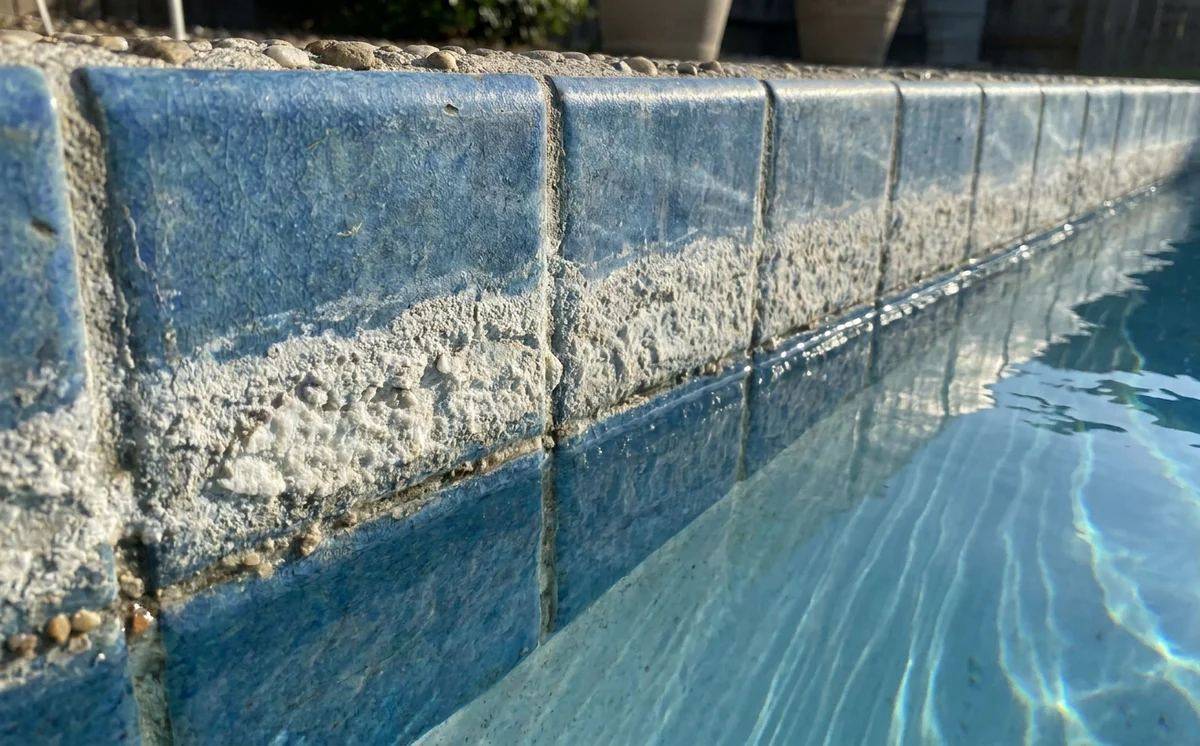
Run a finger along your pool’s waterline tile. If it feels like sandpaper and shows a chalky white band that no amount of brushing touches, congratulations: you own a Scottsdale pool. That crust is calcium scale, and around here it’s not a question of whether your tile gets it, only how fast.
The good news is that calcium buildup is removable and, with the right habits, largely preventable. Here’s how to identify which type of scale you’re fighting, what you can safely do yourself, and when professional bead blasting is the smarter call.
Why Scottsdale pools grow a white tile line
Calcium buildup on pool tile happens when hard water evaporates at the waterline and leaves its dissolved minerals behind. High pH and alkalinity speed it up. In the Scottsdale area, tap water is rated very hard, so scale forms faster here than almost anywhere in the country.
Our summer evaporation makes it worse. As inches of water leave your pool every week, the calcium stays and concentrates, and every refill brings more. The waterline is where evaporation, sunlight, and minerals all meet, which is why the scale draws itself a neat white stripe right at eye level, exactly where you and your guests look first.
First, figure out which scale you have
There are two kinds of calcium scale, and mixing up the treatment wastes a weekend. Put a few drops of a scale remover or diluted muriatic acid on an inconspicuous spot. If it fizzes, you have calcium carbonate, the white flaky kind that responds well to DIY removal. If nothing happens, you’re looking at calcium silicate, a harder gray-white deposit that built up over years, and no household product is going to move it. Silicate scale is bead blasting territory, so skip ahead.
DIY removal that actually works on carbonate scale
- Drop the water level a few inches below the tile line so you can work dry.
- Start with a pool-specific scale remover. Gel formulas cling to vertical tile and give the acid time to work. Follow the label, wear gloves and eye protection, and work in shade so it doesn’t dry instantly.
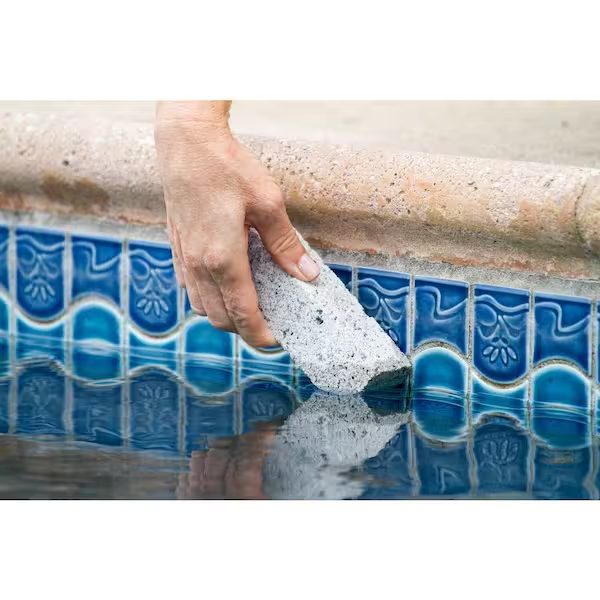
- Use a pumice stone on ceramic or porcelain tile only. Keep both the stone and the tile wet, and rub gently. Pumice is softer than fired tile but harder than glass and soft stone, so never use it on glass tile, and test a small corner first.
- For stubborn spots, carefully step up to diluted muriatic acid. Always add acid to water, never the reverse, and rinse the tile as you go. If this step makes you nervous, that’s a healthy instinct. It’s where most DIY tile damage happens.
- Rinse, refill, and retest your chemistry. Scale work drops acid into the pool, so check pH and alkalinity afterward.
A fair warning about effort: a typical play pool has 60 to 80 linear feet of waterline. Cleaning it by hand with a stone the size of a bar of soap is a full weekend of knuckle work, which is why the pros bring machines.
When bead blasting is the smarter call
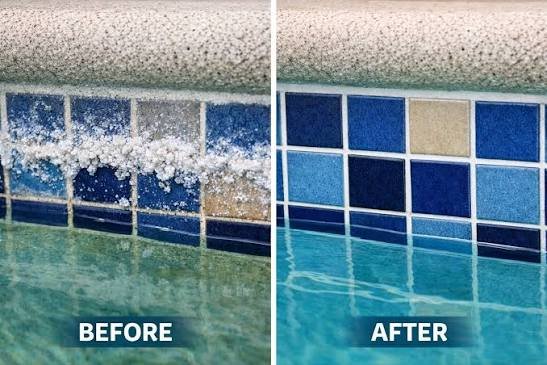
Professional tile cleaning uses compressed air to fire a soft blasting media, usually glass bead, at the scale. It strips years of buildup off in hours without chemicals and without the scratch risk of hand scraping. It’s the right tool when the scale is silicate, when you have glass or decorative tile that pumice would ruin, or when the buildup is simply too much for hand work. Our pool tile cleaning service handles Scottsdale pools from McCormick Ranch to Gainey Ranch, and the before-and-after on a scaled glass tile spa is genuinely satisfying to watch.
Keeping the scale from coming back
Removal without prevention is a subscription. Three habits break the cycle. First, keep pH and alkalinity in range, because scale forms fastest in high-pH water. Our guide on lowering pH and alkalinity covers the how. Second, watch your calcium hardness number. Once it climbs well past 400 ppm, no chemical removes it, and a partial drain and refill is the honest fix, the same logic we covered for high cyanuric acid. Third, brush the waterline weekly before deposits harden. A soft brush pass while the scale is still soft film is thirty seconds of work. A year of skipped passes is a bead blasting appointment.
Questions Scottsdale pool owners ask us
Does vinegar remove calcium from pool tile?
On a light, fresh film, warm white vinegar and a scrub brush can help. Against an established crust it’s too weak to matter. Pool scale removers or careful use of diluted muriatic acid work far better on real buildup.
Will a pumice stone scratch my tile?
Used wet on glazed ceramic or porcelain tile, pumice is generally safe. It absolutely will scratch glass tile, painted surfaces, and soft natural stone. When in doubt, test a hidden corner first, and keep both surfaces wet the whole time.
Can I remove calcium buildup without draining the pool?
For waterline scale, yes. Lowering the water a few inches is enough to work on the tile band. A full drain only enters the picture when the whole surface is scaled or your calcium hardness is so high the water itself needs replacing.
What causes calcium buildup on pool tile?
Hard fill water, evaporation concentrating minerals, and pH drifting high. The Valley delivers all three at once, which is why scale shows up here in a season while pools in soft-water states go years without it.
Do magic erasers work on pool tile calcium?
They polish off light film and water spots nicely, but they’re foam. Against crusted scale they have no cutting power. Think of them as maintenance between cleanings, not removal.
How often should pool tile be professionally cleaned?
With decent chemistry and weekly brushing, many Valley pools go two to three years between professional tile cleanings. Pools with water features, glass tile, or chronically hard fill water tend to need it more often.
Want the tile line handled for you?
The white stripe is optional. Orange Tree Pool Service brushes waterlines on every visit as part of weekly pool service in Scottsdale, keeps your chemistry out of the scale-forming zone, and when a tile line needs a real reset, our tile cleaning service makes it look new again. Call (623) 343-0400 or request a free quote.
Comment question of the week: pumice stone loyalists versus scale remover fans, which camp are you in, and has either one actually kept up with a Scottsdale summer?