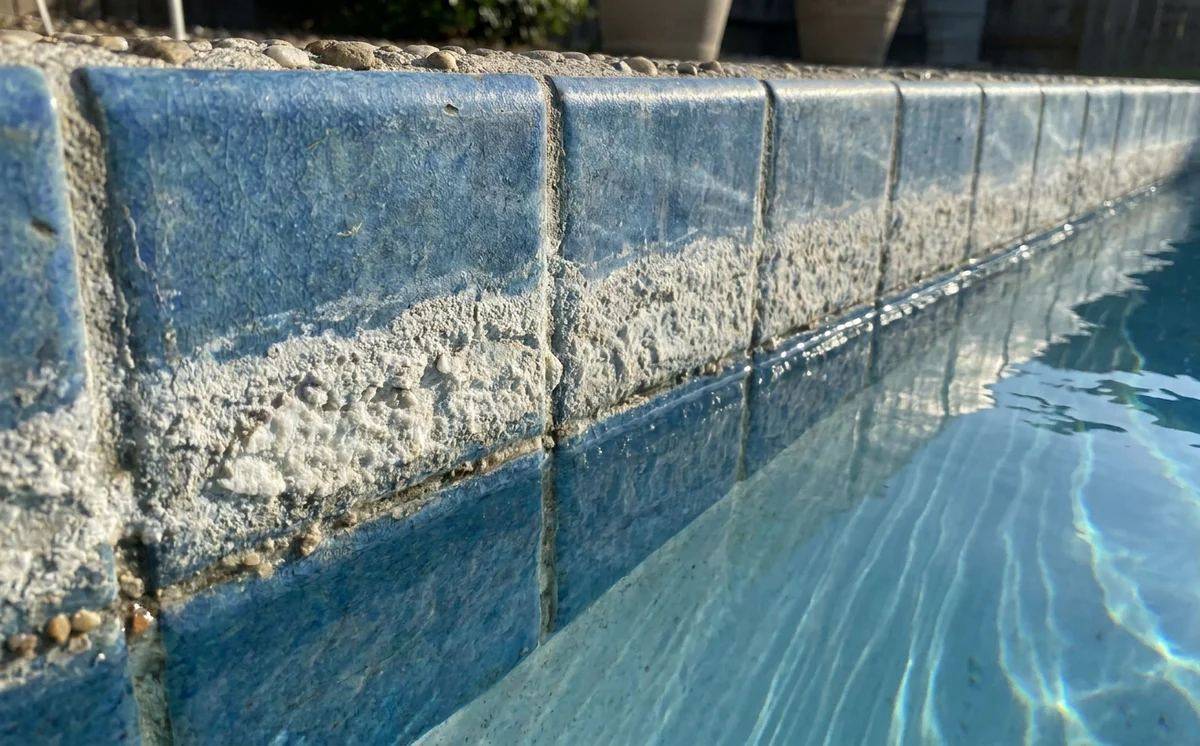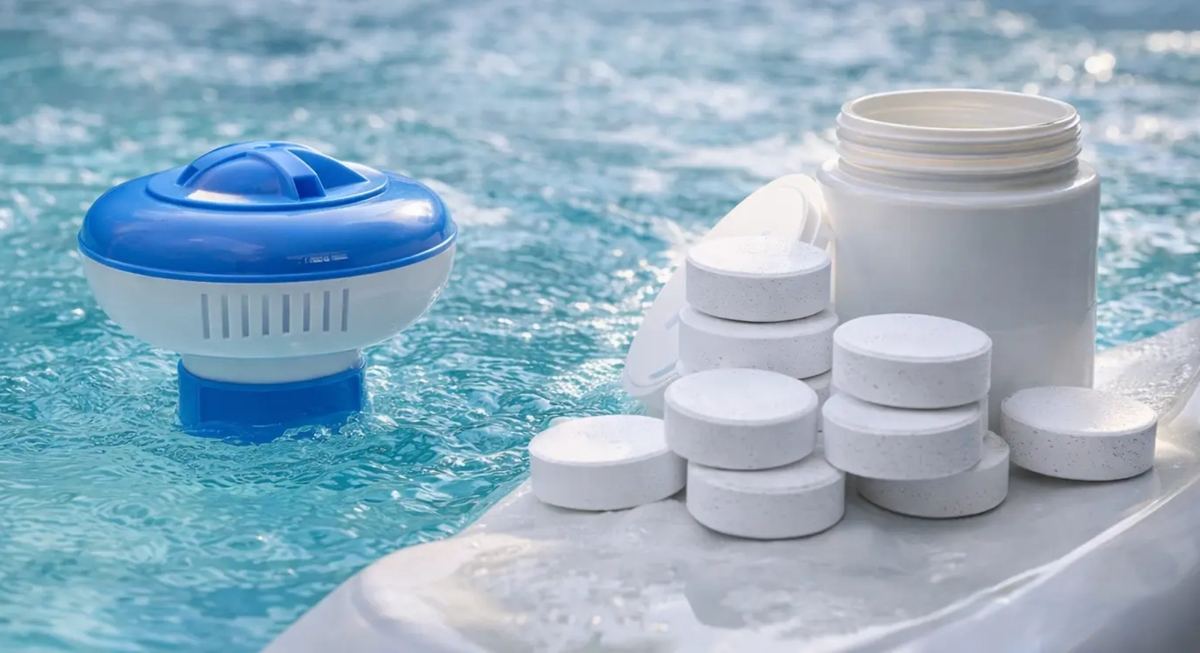
Here’s one of the most confusing calls we get from Glendale pool owners. The test strip says chlorine is fine. The floater is full of tabs. And the pool is turning green anyway. How can a pool with “good” chlorine grow algae?
Nine times out of ten, the answer is a chemical almost nobody tests: cyanuric acid. It builds up silently all summer, and past a certain point it handcuffs your chlorine so badly that no amount of tabs will save you. Here’s how it works, how to check where you stand, and when the only real fix is a partial drain.
What cyanuric acid actually does
Cyanuric acid (CYA), also called stabilizer or conditioner, is sunscreen for your chlorine. It protects chlorine from being destroyed by UV rays. The ideal range for most pools is 30 to 50 ppm. Below that, the Arizona sun burns off chlorine within hours. Far above it, chlorine becomes too slow to keep up with algae and bacteria.
Some stabilizer is essential here. An unprotected pool in full Phoenix sun can lose most of its chlorine by mid afternoon. That’s exactly why we covered adding shock after sundown in our pool shocking guide. CYA is the fix for that. The trouble starts when the fix keeps stacking up.
The problem: CYA only ever goes up
Every chlorine tab in your floater is trichlor, and trichlor is roughly half stabilizer by weight. Each tab that dissolves leaves CYA behind. Chlorine gets used up and leaves the pool. Stabilizer doesn’t. It doesn’t evaporate, it doesn’t degrade in any meaningful timeframe, and the filter can’t catch it.
Phoenix-area pools make it worse in a sneaky way. Our brutal evaporation removes pure water and leaves every dissolved solid behind, so the same amount of CYA gets more concentrated as summer grinds on. A Glendale pool running tabs from March through September can quietly climb past 100 ppm, double the healthy ceiling. Pool folks call the result “chlorine lock.” Technically the chlorine still works, it just works so slowly that algae outruns it.
How much chlorine do you need as CYA climbs?
Industry guidance puts the free chlorine target at roughly 7.5 percent of your CYA level. Watch what that does to the chlorine you’d need as stabilizer builds:
That’s the trap. At 120 ppm of stabilizer, the 3 ppm of chlorine your test strip calls “good” is functionally almost idle. The water can read perfect and still grow algae, which also explains the frustrating pattern of a pool that turns green days after a shock that should have nuked everything.
How to lower cyanuric acid
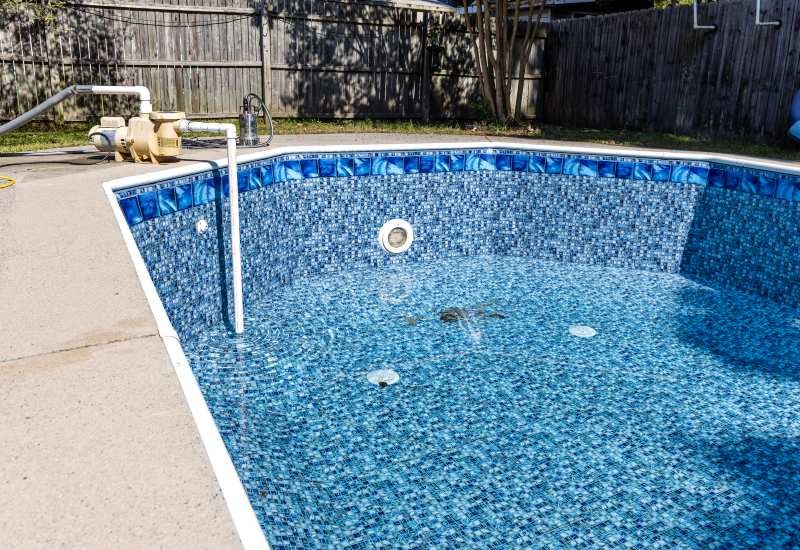
Here’s the part nobody likes to hear: dilution is the only fix that reliably works. CYA reducer products exist, and the honest review from the field is that results are slow, partial, and inconsistent. Water replacement is simple math instead. Want to go from CYA 120 down to 40? You need to replace roughly two thirds of the water. From 80 to 40, replace about half.
For most Glendale pools that means a partial or full drain and refill. Some Valley companies also run mobile reverse osmosis rigs that filter your existing water in place, a good option when you want to save the water or a full drain is risky for the surface. Either way, the goal is the same: physically remove stabilizer-loaded water and bring in fresh.
When (and how) to drain a pool in Glendale
Two rules matter here, one about timing and one about where the water goes.
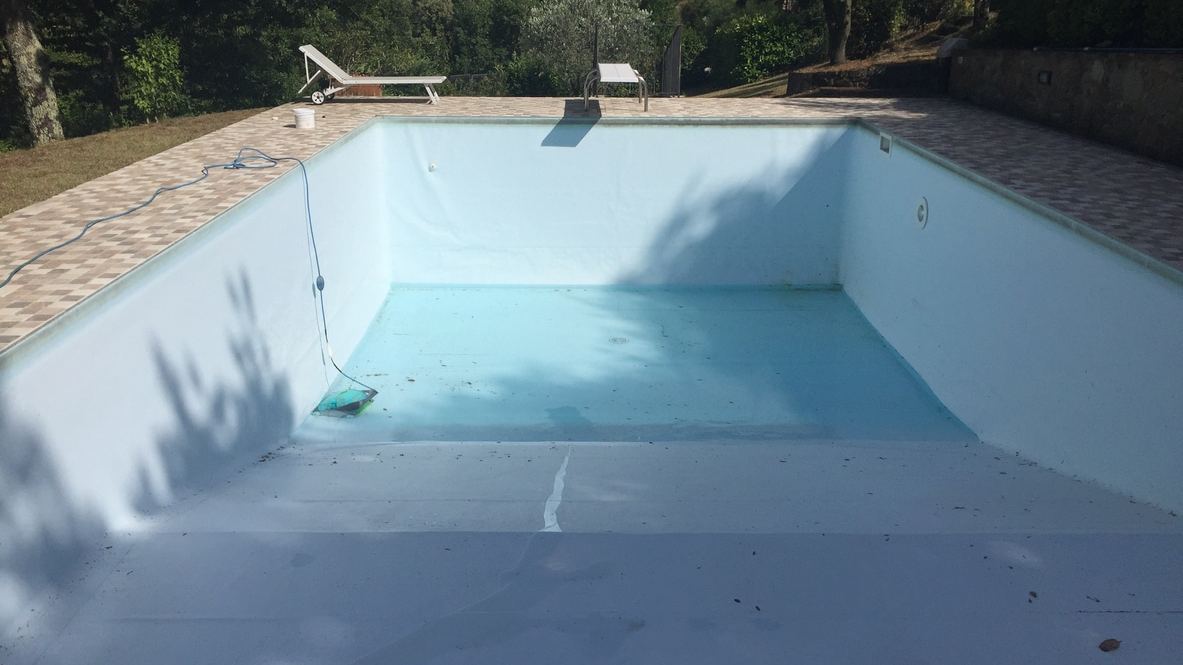
Timing: never fully drain a pool in the middle of a Phoenix summer. Direct sun on an empty plaster shell in 110 degree heat can crack and delaminate the surface in a day. The drain window here is roughly October through March, when it’s cool. That’s exactly why we publish this in September: test your CYA now, and if it’s high, get on the calendar for a fall drain. Most Valley pools want a drain and refill every two to three years anyway, since calcium and total dissolved solids creep up right alongside CYA in our hard water.
Where the water goes: Glendale, like most Valley cities, requires pool water to be drained into your home’s sewer cleanout, not the street or the storm drain. The city publishes guidance on doing it legally, and fines for storm-drain discharge are real. A proper drain also has to run slow enough not to overwhelm the cleanout. It’s a half-day job done right, which is why many owners hand it to us, especially when pairing the drain with an acid wash to reset a stained or scaled surface while the pool is empty.
Questions Glendale pool owners ask us
What should cyanuric acid be in a pool?
Aim for 30 to 50 ppm in a standard chlorine pool. Salt water pools often run a bit higher, 60 to 80 ppm, per most manufacturers. Once CYA passes about 90 to 100 ppm, chlorine slows down enough that problems usually follow.
What is chlorine lock?
It’s the everyday name for overstabilization. Very high cyanuric acid binds so much of your chlorine that it kills algae and bacteria too slowly to matter. The chlorine reading looks fine while the pool behaves as if there’s none.
Can I lower cyanuric acid without draining the pool?
Not reliably. CYA reducer chemicals give slow and inconsistent results in real pools, and nothing else touches it. Diluting the water, through a partial drain and refill or mobile reverse osmosis filtration, is the fix that actually works.
Can I swim in a pool with high cyanuric acid?
The CYA itself isn’t the hazard at typical levels. The risk is indirect: high CYA cripples your sanitizer, so bacteria and algae survive longer than they should. If chlorine is present and the water is clear, swimming is generally fine while you plan the fix.
How often should you drain a pool in Arizona?
Every two to three years for most pools. Our hard water and heavy evaporation concentrate calcium, total dissolved solids, and stabilizer over time, and no chemical removes them. Drain in the cooler months, October through March, never in peak summer heat.
Why is my chlorine high but the pool is still green?
Check cyanuric acid first. If it’s well over 100 ppm, your chlorine is present but too slow to kill the algae bloom. Confirm with a proper CYA test, then plan a partial drain, because shocking an overstabilized pool is pouring money into a handcuffed sanitizer.
When did you last test your CYA?
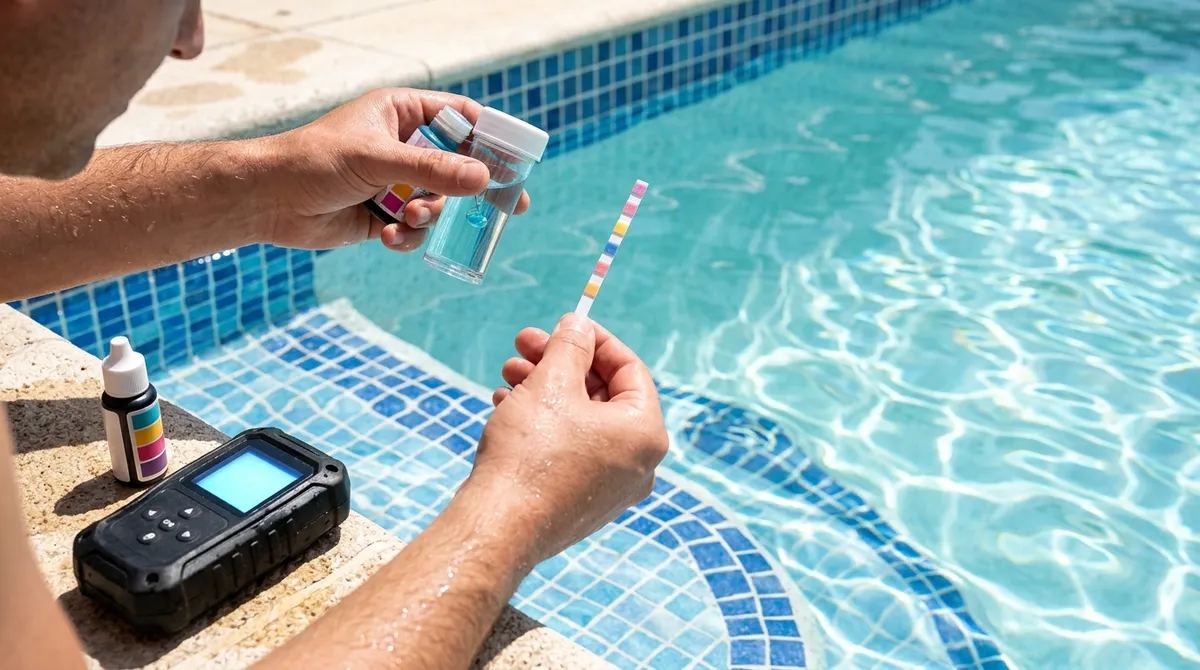
Test strips fade and guess. On every visit, Orange Tree Pool Service tests the numbers that matter, and CYA is one we watch all summer precisely so our customers never hit chlorine lock in the first place. If your pool is drinking chlorine and staying stubborn anyway, our weekly pool service in Glendale includes the water testing and honest advice on whether a fall drain makes sense. Call (623) 343-0400 or request a free quote.
Curious question for the comments: go look at your last test, or grab a strip now. What’s your CYA number? If you’re over 100, you’re not alone, and now you know why the tabs stopped pulling their weight.