How to Lower Your Pool's pH and Alkalinity in the Summer Heat
High pH and high alkalinity are two of the most common water problems in Phoenix, and the summer heat makes them worse. As water evaporates in the extreme temperatures, the hard minerals in Valley tap water concentrate, and pH tends to drift upward with heat, aeration, and heavy swimmer use. When pH climbs too high, your chlorine stops working effectively, the water turns cloudy, and scale starts forming on tile and equipment. To lower pool pH and alkalinity, you add acid, either liquid muriatic acid or dry acid, then retest and adjust. The catch is that pH and total alkalinity move together, so the order and method matter.
This guide explains how to lower both correctly, why the desert heat and hard water make this a recurring battle, and when high pH has already caused damage that needs a professional.
How to Lower pH and Alkalinity Correctly
The key thing to understand is that the same chemical, acid, lowers both pH and total alkalinity at the same time. You cannot lower one without affecting the other, so the approach depends on which is more out of range.
The target ranges are a pH of 7.2 to 7.6 and total alkalinity of 80 to 120 ppm. Total alkalinity acts as a buffer that keeps pH stable, so it is usually best to get alkalinity into range first, which brings pH along with it.
- Test the water. Measure pH and total alkalinity with a reliable kit or test strips. Note how far each is above range.
- Add acid to lower alkalinity. Use muriatic acid or dry acid, also called sodium bisulfate, following the dosage for your pool volume. Add it slowly, ideally over a return jet or in the deepest part of the pool with the pump running.
- Let it circulate, then retest. Wait several hours with the pump running, then test again. Lowering alkalinity often takes more than one dose, so work in steps rather than dumping a large amount at once.
- Fine-tune pH. If alkalinity is in range but pH is still a little high, a small additional dose of acid brings it down. If lowering alkalinity dropped pH too far, gentle aeration raises pH back up without changing alkalinity much.
Working in stages and retesting is what keeps you from overshooting into low pH, which is corrosive to plaster and equipment in its own way.
Why Phoenix Heat and Hard Water Make This Harder
Water chemistry in the desert fights you in ways it does not in milder climates, and summer is the peak of it.
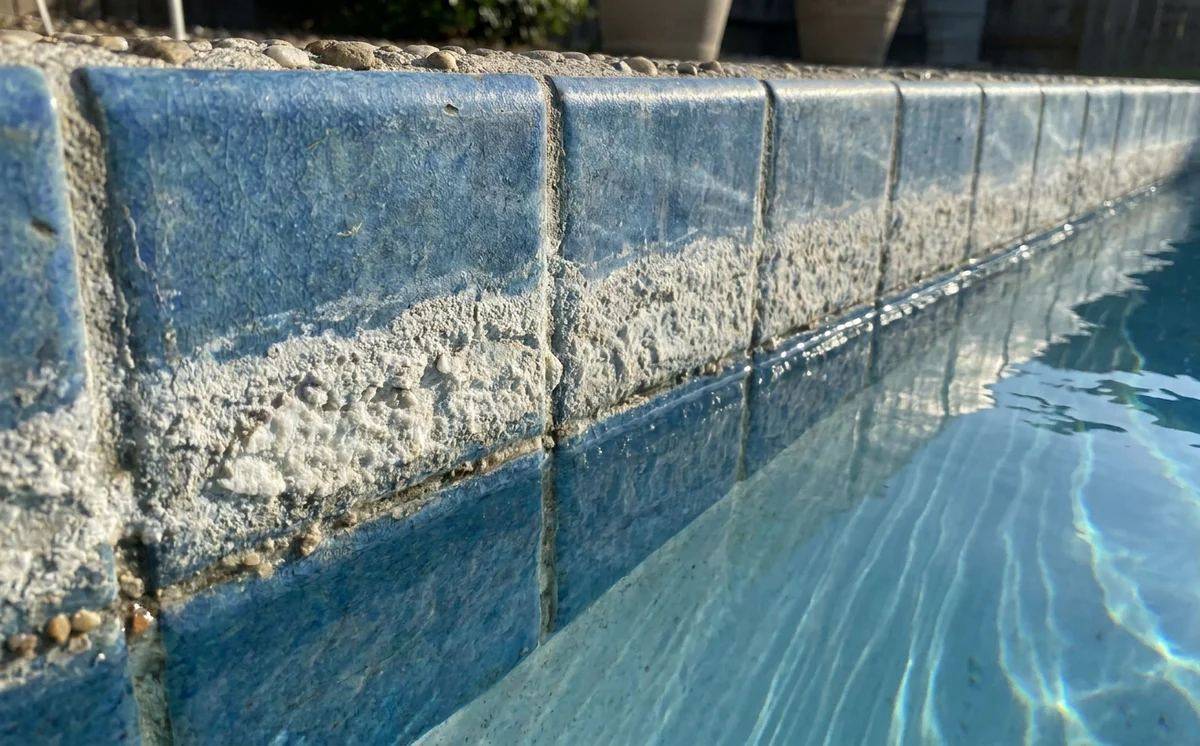
Phoenix tap water is hard, frequently 300 to 500 ppm calcium hardness. When you combine high calcium with high pH, the water becomes prone to scaling, which is the chalky white buildup that forms on the tile line, inside pipes, and on equipment. Intense summer evaporation makes it worse by concentrating those minerals as water leaves the pool and you top it off with more hard water.
Heat also nudges pH upward on its own. Warm water, the aeration from water features and heavy swimmer activity, and high bather loads during peak swim season all push pH higher. As pH rises, chlorine becomes far less effective at sanitizing, so you can be adding chlorine and still end up with cloudy water or an early algae bloom. Staying ahead of pH is one of the main reasons consistent weekly pool service matters so much in the Valley, because small, regular adjustments prevent the big swings that damage surfaces and cloud the water.
What High pH Does If You Ignore It
High pH is not just a number on a test strip, it causes real, visible problems. Chlorine loses effectiveness, so the water looks dull or cloudy and is more likely to grow algae even when your chlorine reading seems fine. Over time, high pH combined with Phoenix hard water leaves scale on the waterline tile, etches into the surface finish, and shortens the life of heaters and other equipment by coating internal components.
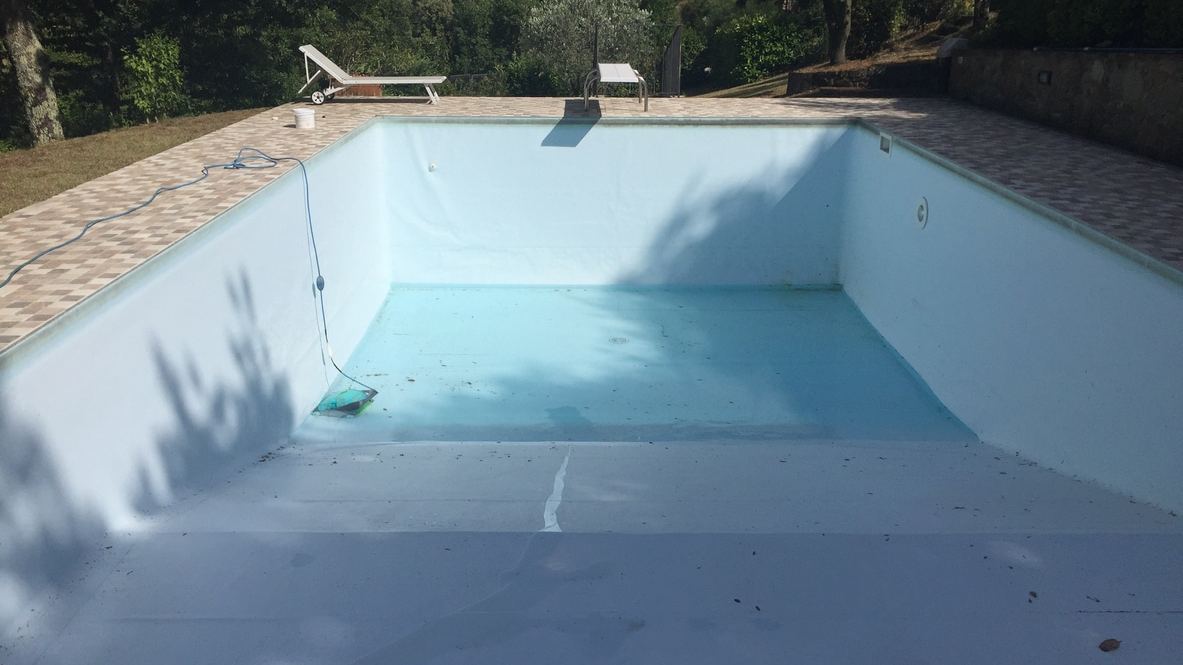
If scaling has already formed, balancing the water going forward stops it from getting worse, but it will not remove what is already there. Heavy calcium buildup on tile usually requires professional pool tile cleaning, which uses specialized methods to strip the scale without damaging the tile. When scale and staining have built up across the entire surface of the pool, a drain and acid wash removes the top layer of buildup and restores the finish. Both are jobs where the right technique protects your surfaces, and the wrong one causes damage.
Dealing with cloudy water, scale, or chemistry that will not stay balanced? Call Orange Tree Pool Service at (623) 343-0400 or schedule a visit and we will get your water balanced and your surfaces cleaned up.
Keeping pH and Alkalinity Balanced All Summer
The way to win this battle is consistency, not big corrections. Test at least twice a week during the hottest part of the year, since chemistry moves faster in the heat. Keep total alkalinity in the 80 to 120 ppm range so it can buffer pH and hold it steady. Watch your calcium hardness, and if it climbs too high from evaporation and hard fill water, a partial drain and refill lowers it. And after any monsoon dust storm, test and adjust promptly, because incoming debris and rain can swing your numbers overnight. For homeowners who would rather not chase test strips in triple-digit heat, a weekly service plan keeps everything balanced and catches scaling before it sets in.
Final Thoughts
High pH and alkalinity are manageable once you understand that acid lowers both together and that the goal is steady, balanced water rather than dramatic corrections. In Phoenix, hard water and summer heat make this an ongoing task, and letting pH run high leads straight to cloudy water and calcium scale on your tile and equipment. Test often, adjust in steps, and address scaling before it sets. Orange Tree Pool Service keeps water balanced with weekly maintenance and restores scaled surfaces with tile cleaning and acid wash across Phoenix and the surrounding communities. Call (623) 343-0400 or schedule service online.