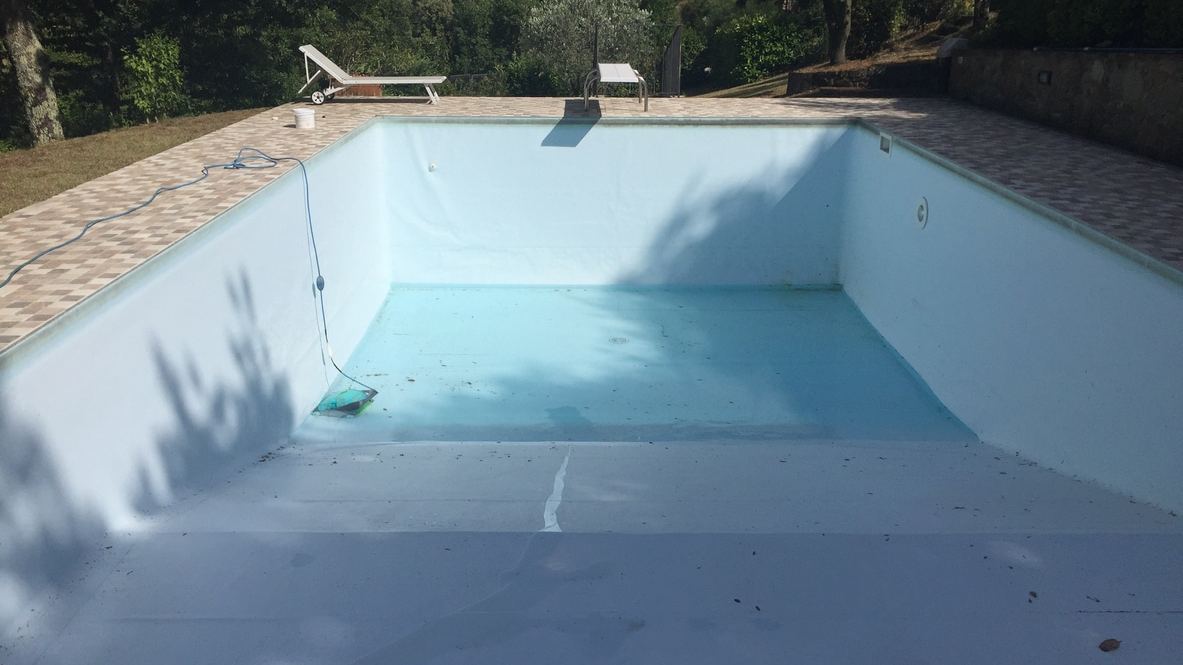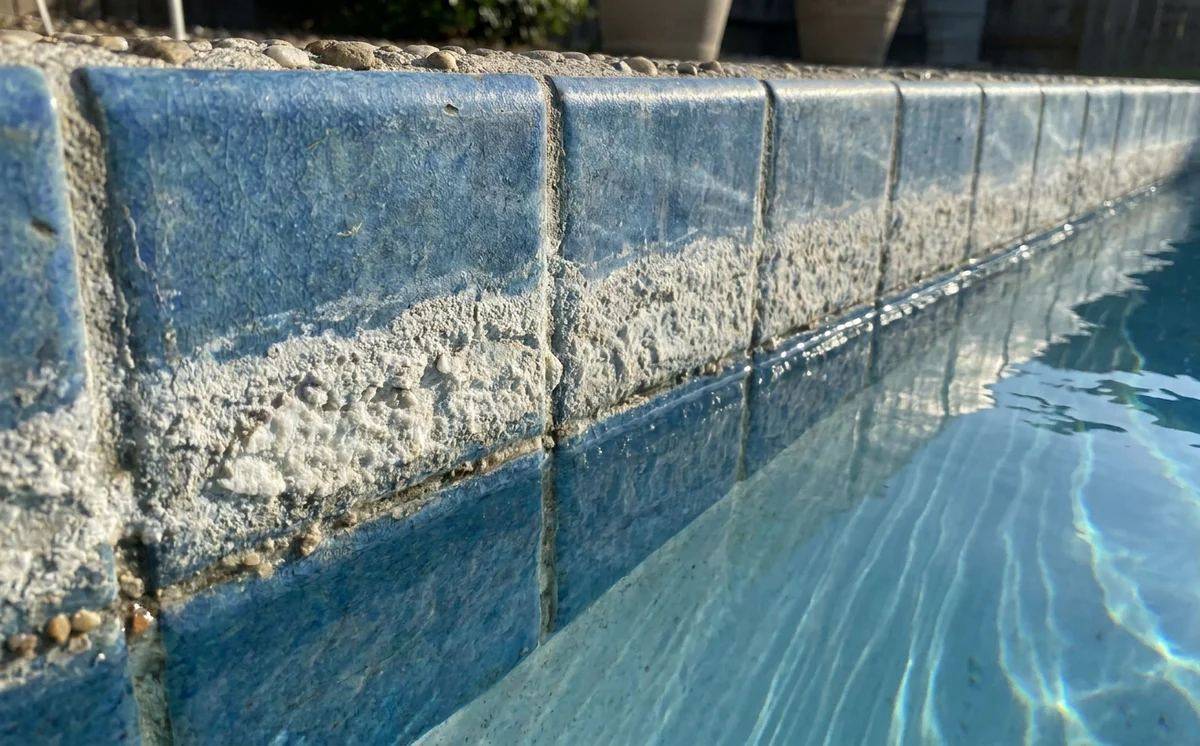
Some pools reach a point where no amount of chemicals, brushing, or filtering brings the sparkle back. The plaster looks gray and tired, stains have soaked in like coffee rings on a countertop, and even perfectly balanced water somehow looks dingy. That’s usually the moment somebody mentions the words “acid wash,” and the questions start.
October is when acid wash season opens in the Valley, because the job requires an empty pool and an empty pool requires cool weather. So the timing is right to explain what an acid wash actually is, what it fixes and what it can’t, and how to tell whether your pool needs one or just needs a better cleanup plan.
What a pool acid wash actually is
A pool acid wash is a deep-cleaning process where the pool is drained and a diluted muriatic acid solution is applied to the plaster surface. The acid strips away a paper-thin layer of plaster, taking years of stains, mineral film, and embedded grime with it and exposing the fresh, bright surface underneath.
Think of it as sanding a scratched tabletop instead of scrubbing it. You’re not cleaning the surface, you’re removing it, one whisper-thin layer at a time. That’s why the results are so dramatic, and also why an acid wash isn’t something you do casually or often. Plaster is a finite resource, and each wash spends a little of it.
The signs your pool actually needs one
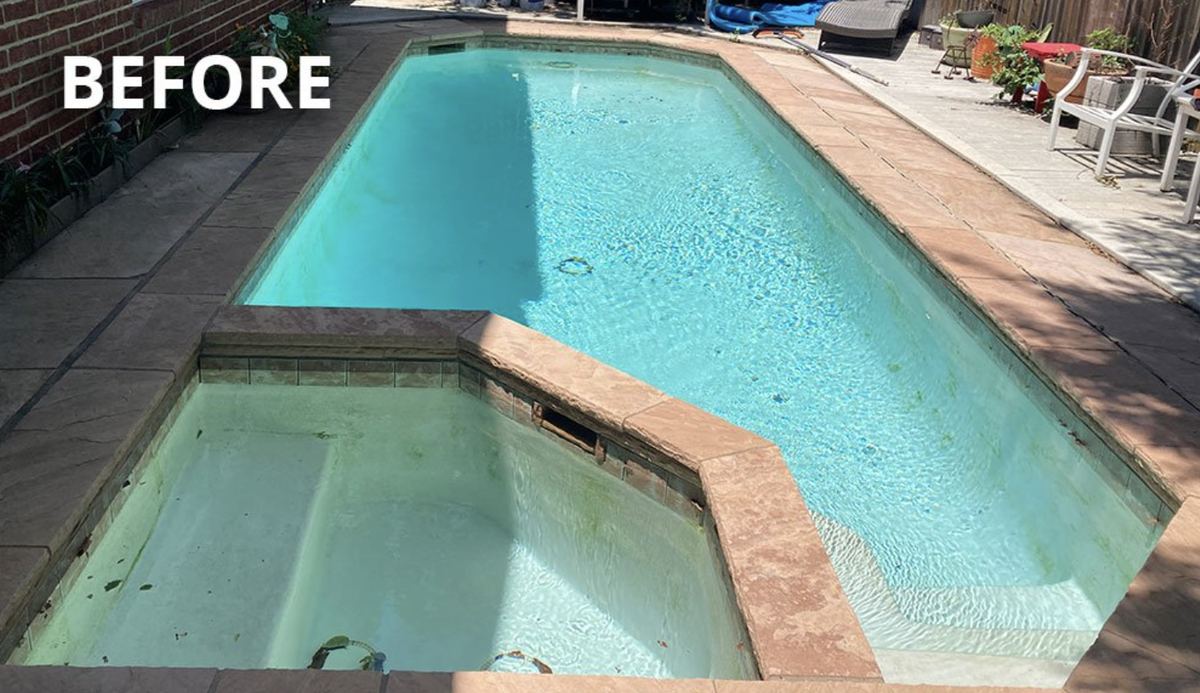
We get asked to quote acid washes far more often than pools actually need them, so here’s the honest checklist. An acid wash earns its keep when stains have penetrated the plaster itself: mineral and metal staining that chemicals won’t lift, broad gray or brown discoloration across the whole surface, the shadowy footprints left behind after a long algae infestation, or a white calcium film creeping over everything below the tile line. If your pool sat green through a season, or the plaster looks like it’s been through a decade of hard water with no defense, the surface has absorbed things that surface cleaning can’t reach.
On the other hand, an acid wash is the wrong tool for problems that live in the water rather than the plaster. A green pool with healthy plaster needs our Green to Clean treatment, not a drain. Waterline scale on the tile is a tile cleaning job. And cloudy or stubborn water is almost always chemistry, which is a service call, not a renovation.
Acid wash, chlorine wash, or replaster?
Three options live on the same spectrum, and choosing the right one is mostly about how far gone the surface is:
Chlorine wash
Pool is drained and scrubbed down with a strong chlorine solution. Kills algae and bacteria hiding in the surface without removing plaster.
Best for: post-algae cleanup on plaster that still looks good
Acid wash
Strips a thin plaster layer to remove embedded stains and mineral film. The dramatic before-and-after option.
Best for: stained but structurally sound plaster with life left in it
Replaster
A full new interior surface. The expensive last resort when plaster is thin, rough, or delaminating.
Best for: plaster at the end of its 15-to-25-year life
Here’s the field test we use: if the plaster is already rough like sandpaper, showing dark patches of gunite underneath, or flaking, an acid wash will make those problems more visible, not less. Money spent stripping a dying surface is money that should have gone toward the new one.
How the job is done right
A proper acid wash is a choreographed half-day to full-day job, and the choreography matters because both the pool and the crew need protecting.
- A legal, controlled drain. Pool water goes to the home’s sewer cleanout at a pace the line can handle, per Valley city rules, the same process we covered in our draining guide. In cool weather only; an empty pool in summer heat is how plaster cracks.
- Protect everything that isn’t plaster. Light niches, fittings, and metal rails get attention before any acid comes out.
- Wash in sections. The diluted acid mix goes on wall by wall, working top to bottom, scrubbed and rinsed before it can sit too long in any one spot. Uneven dwell time is how DIY jobs end up with zebra streaks.
- Neutralize and remove the waste. The spent acid puddle at the bottom gets neutralized with soda ash before it’s pumped out and disposed of. Skipping this step is illegal in most Valley cities and terrible for everything downstream.
- Refill and start up the chemistry. Fresh fill water needs a proper startup sequence, and because the pool now holds all-new water, this is the moment your stabilizer, calcium, and salt levels get reset to ideal from zero.
That last point is the quiet bonus of an acid wash: it doubles as the water replacement we recommend every few years anyway. High CYA, high calcium, and a stained surface very often arrive together, and one October appointment fixes all three.
Why this is not a DIY weekend project
We’re a company that happily teaches customers to shock their own pools and vacuum their own floors, so take this in that spirit: acid washing is the one job we genuinely recommend against doing yourself. You’re working inside a concrete bowl with muriatic acid, fumes with nowhere to go, and a surface that permanently records every mistake. Too strong a mix or too long a dwell etches grooves. Uneven work leaves streaks you’ll see for years. And the disposal rules for the neutralized waste are real, with real fines. The pros carry the safety gear, the neutralizer, the pumps, and the muscle memory from hundreds of washes.
What Deer Valley pools have in common
A big share of the pools in the Deer Valley corridor went in during the 80s and 90s building waves, which means original or once-replastered surfaces that have been drinking hard water for decades. Those are exactly the pools where an acid wash delivers the most dramatic transformation, and also the ones where the acid-wash-or-replaster judgment call matters most. We inspect the plaster honestly before quoting, because recommending an acid wash on plaster with two years of life left helps nobody.
Questions Deer Valley pool owners ask us
How long does a pool acid wash take?
The wash itself is usually a half day to a full day. Add a day or so on either side for the controlled drain beforehand and the refill afterward, which on a typical pool runs on a garden hose for 24 to 48 hours.
How often can a pool be acid washed?
Sparingly. Each wash removes a thin layer of plaster, so most surfaces can only handle a few over their lifetime. If a pool seems to need one every couple of years, the real problem is water chemistry or an aging surface, not cleanliness.
Does an acid wash damage the plaster?
Done correctly, it removes an intentionally tiny amount of surface and leaves the plaster brighter and smoother. Done wrong, with strong mix or uneven dwell time, it can etch and streak permanently. Technique is the whole game.
What does a pool acid wash cost?
It depends on pool size, surface condition, and whether the drain, tile cleaning, or startup chemicals are bundled in. Rather than quote a range that’s wrong for your pool, we look at it and give you a real number. Quotes are free.
Will an acid wash remove black algae?
It’s one of the most effective weapons against it. Black algae roots into plaster pores where chemicals struggle to reach, and stripping the surface layer physically removes those roots. Stubborn cases sometimes combine a chlorine wash and acid wash.
Can you acid wash a pebble or fiberglass pool?
Pebble surfaces, yes, with adjusted technique and expectations. Fiberglass and vinyl, never; there’s no sacrificial layer to strip, and acid ruins the gelcoat. Those surfaces get different restoration treatments.
Fall is the window
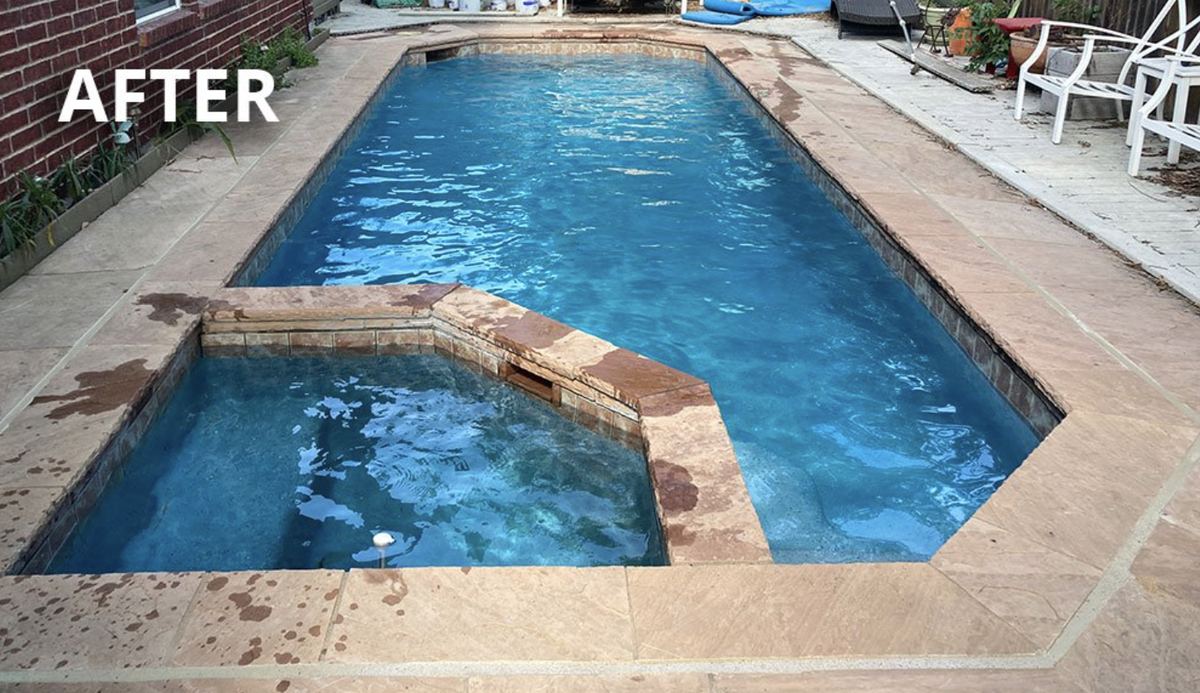
If your plaster has been bothering you all summer, this is the season to fix it. Orange Tree Pool Service handles the whole sequence: honest surface assessment, legal drain, professional acid wash, startup chemistry, and if you want the full reset, tile cleaning while the pool is empty. We serve Deer Valley and the whole north Valley; call (623) 343-0400 or request a free quote, and our weekly pool service in Deer Valley keeps the new surface looking new afterward.
For the comments: how old is your pool’s surface, and has it ever had an acid wash? If you’re not sure, describe what the plaster looks like and we’ll tell you what we’d check first.