The first cool week in Sun City follows a script. The winter residents are back, the golf carts are out early, and somebody in every neighborhood walks over to the equipment pad, turns the pool heater on for the first time since spring, and gets absolutely nothing. No flame, no hum, no heat. Just cold water and bad timing.
It happens every November, and there’s a reason: a heater that sat untouched through an entire Phoenix summer is being asked to wake up on the exact week you finally want it. The good news is that most no-heat calls trace back to a short list of causes, and a few of them are things you can safely check yourself before anyone rolls a truck. Here’s the whole list, sorted by what you can do about it.
Why heaters always seem to break in November
Pool heaters in the Valley live an odd life. They work hard from fall through spring, then sit idle for five or six months while the summer sun does the heating. During that long nap, dust and debris settle into the cabinet, insects and spiders move into burner trays and orifices, wiring connections corrode, and rubber components dry out. Nothing announces itself, because nothing is running.
Then the first cold front arrives, you press the button, and every small problem that accumulated since April shows up at once. That’s why heater failures cluster so tightly around the first cold snap, and it’s also why we tell Sun City customers to test-fire the heater in early October, before the week you actually need it. A problem found in October is an appointment. The same problem found in November, when every heater in the northwest Valley wakes up together, is a wait.
The most common reasons a pool heater stops working
Most pool heater problems come from six sources: low water flow from a dirty filter or pump issue, thermostat settings that quietly got turned down, a tripped breaker or failed timer, gas supply or ignition trouble, a failed sensor or pressure switch, and scale buildup inside the heat exchanger from our hard Valley water. Flow and settings problems are fixable by the owner. Gas, ignition, and exchanger problems belong to a licensed technician.
That order isn’t random. In our experience, the embarrassingly simple causes are also the most common ones, which is excellent news for your wallet. Before assuming the worst, match your symptom to the likely culprit below.
Dead: nothing happens at all
Usually power, not the heater. A tripped breaker, a failed timer, a tripped GFCI, or a blown control fuse.
First move: check the breaker panel and any timer or automation schedule
Starts, then shuts off
Classic low-flow behavior. A dirty filter, a clogged pump basket, or a failing pressure switch tells the heater it’s unsafe to fire.
First move: clean the filter and baskets, then retry
Runs, but water stays cold
Often a thermostat set below the water temperature, a valve bypassing the heater, or simply not enough runtime for the season.
First move: set the thermostat well above current water temp and give it hours, not minutes
Clicks, but won’t ignite
Ignition trouble: a failed igniter, a gas supply issue, or debris in the burner tray from the summer off.
First move: confirm the gas valve is on, then call a pro
Error code on the display
The heater is telling you which sensor or safety circuit tripped. Codes vary by brand and model.
First move: photograph the code and share it when you call
Rust flakes or dripping at the heater
The serious one. Corrosion or scale damage in the heat exchanger, usually from years of unbalanced water.
First move: shut it down and get a diagnosis before running it again
Five safe checks before you pick up the phone
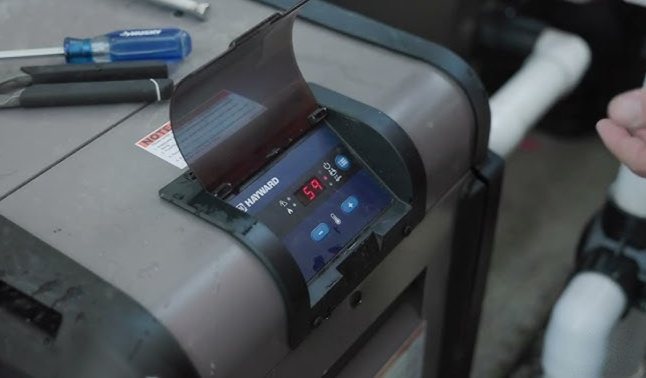
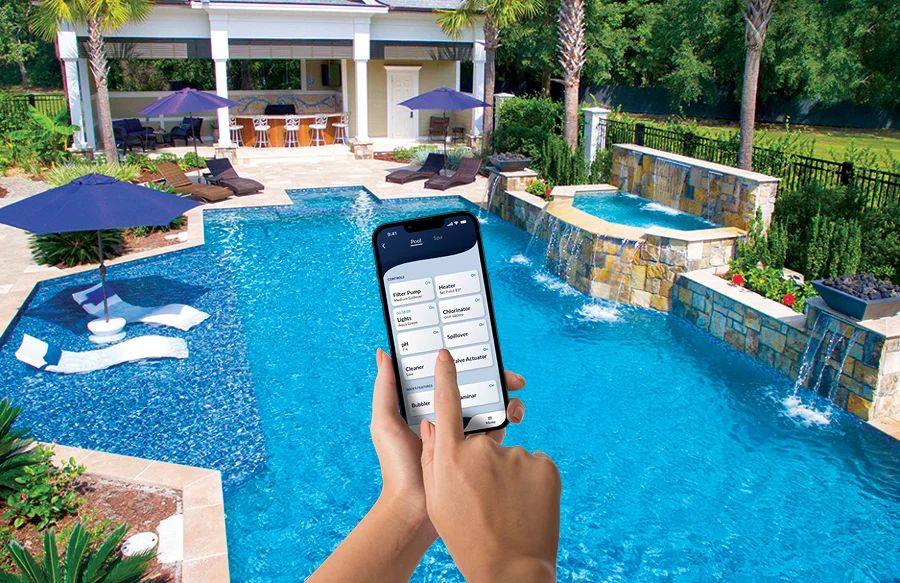
You don’t need tools for any of these, and together they resolve a surprising share of no-heat mornings. First, check the thermostat: someone lowered it in spring, and it needs to be set above the current water temperature before the heater will do anything. Second, make sure the pump is actually running and the filter is clean, because a heater without strong flow refuses to fire on purpose. Third, look at the breaker panel for anything tripped, and check that a timer or automation schedule isn’t holding the equipment off.
Fourth, for gas heaters, confirm the gas shutoff valve at the unit is open; valves get closed for the season and forgotten. Fifth, if the display shows an error code, write it down or photograph it before power-cycling. That code is diagnostic gold, and it saves your technician real time. If the heater still won’t cooperate after those five, the problem is genuinely internal.
When to stop and call a licensed pro
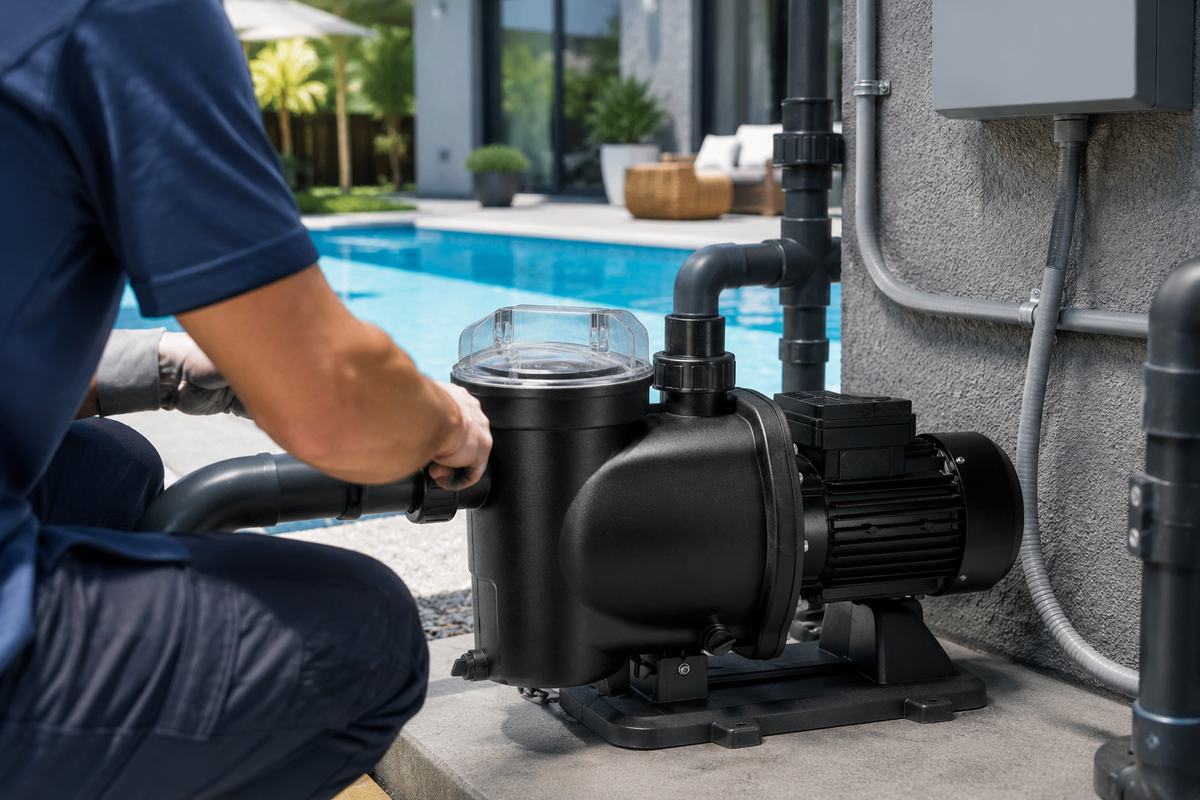
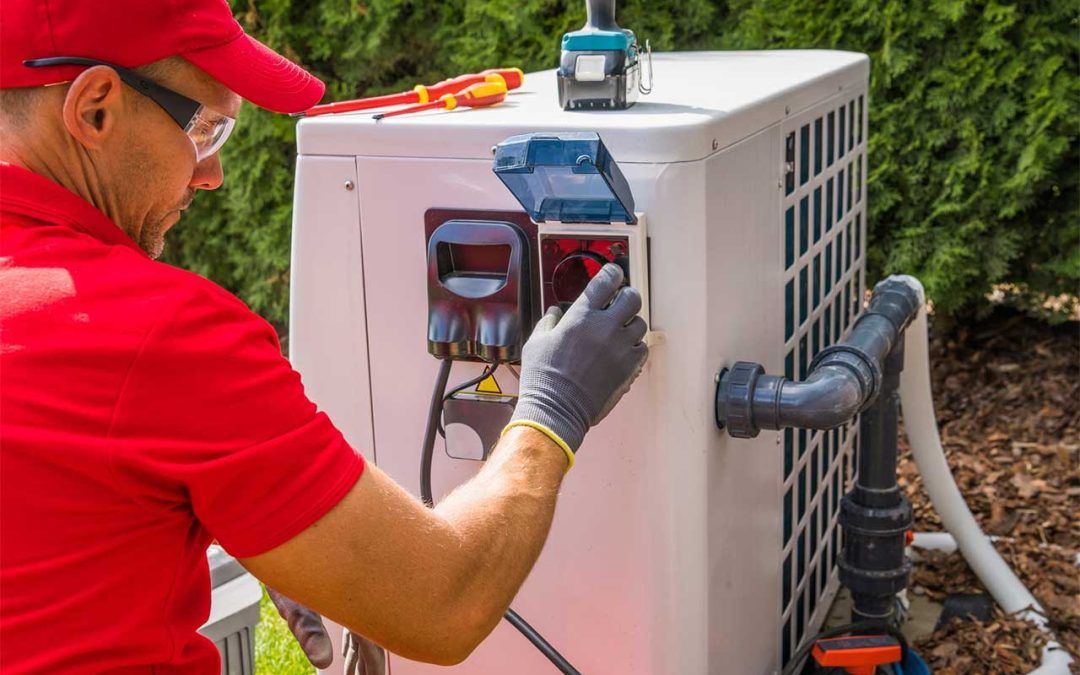
Here’s the line we draw, and we draw it for safety rather than for business. Anything involving gas lines, burner assemblies, igniters, flame sensors, or the heat exchanger is professional territory, because a gas appliance repaired wrong isn’t like a skimmer basket installed wrong. The same goes for refrigerant circuits on heat pumps and anything inside the electrical compartment beyond the breaker.
A good technician diagnoses by system: confirm flow, confirm power, confirm gas, then walk the ignition sequence until the failure shows itself. It’s methodical work, and it usually ends in a specific part rather than a mystery. When you call, mention the symptom pattern and any error code, since that often means we arrive with the right part on the truck.
The hard water problem: why Valley heaters age faster
There’s a slower failure happening inside every heater in the Valley, and it’s worth understanding because you can actually control it. Our water is hard, and when calcium-heavy water runs through a hot heat exchanger, scale forms on the metal. Scale acts like insulation in exactly the wrong place, forcing the heater to run hotter and longer for the same result, and over years it shortens the exchanger’s life.
Unbalanced chemistry works even faster; corrosive water eats copper exchangers from the inside. Consequently, the cheapest heater repair is the one that never happens: keeping the water balanced week after week. It’s a big part of why our weekly pool service in Sun City customers tend to get long, quiet lives out of their equipment.
Repair or replace? The honest math
For a failed sensor, switch, igniter, or board on a reasonably young heater, repair is the obvious call. However, once a gas heater passes the eight-to-ten-year mark, or when the heat exchanger itself fails, replacement usually beats repair, because you’d be putting a major part into a machine near the end of its run. Modern units are also more efficient than what they replace, which softens the price.
If you do end up shopping, the gas-versus-heat-pump decision matters more in Arizona than almost anywhere, and we broke it down in our guide to choosing between a heat pump and a gas heater. The short version: our mild winters make this one of the best heat pump climates in the country, while gas keeps winning for fast spa heating.
Questions Sun City pool owners ask us
Why won’t my pool heater turn on at all?
Start outside the heater: a tripped breaker, a failed timer, a tripped GFCI outlet, or an automation schedule holding the equipment off. If power is confirmed and the unit is still dead, the control board or transformer is the usual suspect, and that’s a technician visit.
Why does my heater run but the water stays cold?
Check the thermostat first, since it must be set above the current water temperature. Next, remember that heating a full pool takes hours or days depending on the heater type. If it’s genuinely producing no heat, a bypass valve, a scaled exchanger, or a failing component could be at fault.
Why does my pool heater keep shutting off?
Short-cycling is almost always a flow problem. A dirty filter, a full pump basket, or a weak pump starves the heater, and its pressure switch shuts things down for safety. Clean the filter and baskets first; if cycling continues, the switch or a sensor needs professional attention.
Is it safe to troubleshoot a gas pool heater myself?
The outer layer, yes: thermostat settings, breakers, timers, filter cleaning, and confirming the gas valve is open. The inner layer, no. Burners, igniters, gas connections, and anything behind the access panel should stay with a licensed technician, because mistakes with gas appliances carry real risk.
How much does pool heater repair cost in Arizona?
It depends entirely on the failed part. Sensors, switches, and igniters sit at the affordable end, while control boards cost more, and a heat exchanger is the repair that often justifies replacing the unit instead. A proper diagnosis first means you’re quoted for the actual problem, not a guess.
Should I repair or replace an old pool heater?
Past roughly eight to ten years on a gas heater, or any time the heat exchanger fails, replacement usually wins. Newer units run more efficiently, and putting a major component into an aging machine rarely pays off. For younger heaters with minor failures, repair is the easy call.
Get the heat back before the season slips by

Winter is exactly why many of our Sun City neighbors are here, and a dead heater shouldn’t cost you a single week of it. Orange Tree Pool Service diagnoses and repairs gas heaters and heat pumps across the northwest Valley, and our pool heater repair team shows up with the common failure parts on the truck. If the verdict is replacement, we’ll size and quote a new heater installation honestly, with no pressure either way. Call (623) 343-0400 or request a free quote.
For the comments: what’s the first thing you check when the heater acts up? And if your heater has a favorite trick for picking the worst possible week to quit, we’d love to hear the story.