Vacuuming a pool sounds like it should be self-explanatory. Then you’re standing on the deck with thirty feet of floppy hose, the vacuum head keeps floating off the floor, and half the dust you just collected comes blowing back out of the returns like you never touched it. Every pool owner in Peoria has lived some version of that afternoon.
Vacuuming properly is mostly about a handful of details nobody explains: priming the hose, moving at the right speed, and knowing when to send debris to waste instead of through the filter. This guide covers all of it, plus how the automatic options compare when you’d rather never hold that pole again.
The three ways to vacuum a pool
Before the how-to, it helps to know which tool you’re working with, because they behave very differently:
Manual vacuum
A vac head on a pole, connected by hose to your skimmer’s suction. You drive.
Best for: heavy debris after storms, algae cleanup, precision work
Suction-side cleaner
Plugs into the same skimmer suction and wanders the pool on its own, feeding debris to your pump basket and filter.
Best for: everyday dirt, budget setups
Robotic cleaner
Self-contained electric robot with its own motor and filter basket. Nothing goes through your pool’s filter.
Best for: fine desert dust, saving your filter, set-and-forget
Most Peoria pools we service end up with two of the three: an automatic cleaner for the daily grind, and a manual setup in the garage for the weeks when the desert delivers more than the robot can chew.
The gear for manual vacuuming
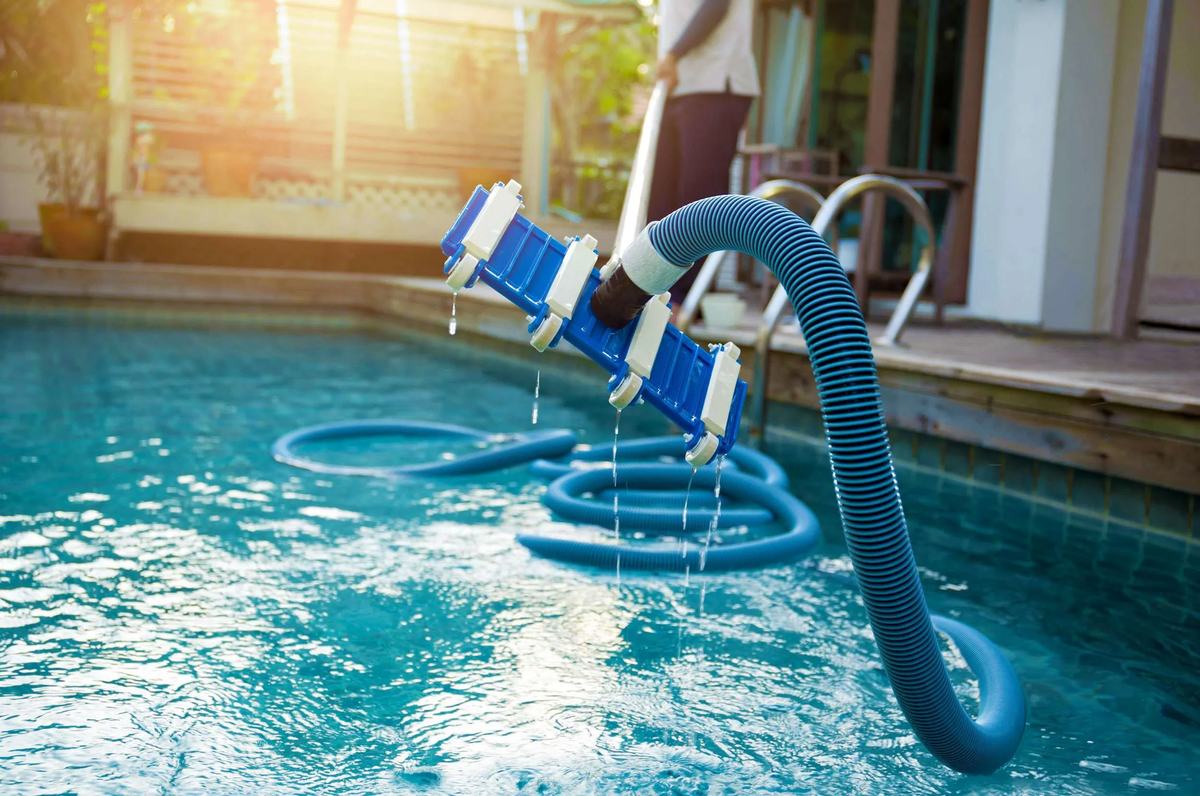
Four pieces, all standard at any pool store. A telescopic pole, which you already own if you have a net. A vacuum head, weighted with side brushes for plaster and pebble pools. A vacuum hose long enough to reach your pool’s farthest corner from the skimmer, usually 30 to 40 feet. And ideally a skimmer vacuum plate, a flat disc that sits on top of the skimmer basket so you can connect the hose without pulling the basket out. It keeps big debris from going straight down your plumbing, and it makes the next part easier.
How to vacuum a pool, step by step
To vacuum a pool: attach the vacuum head to the pole and hose, lower it to the pool floor, fill the hose with water to remove air, connect the hose to the skimmer suction, then push the head across the floor in slow, overlapping passes. Empty the pump basket and check the filter when you finish.
- Assemble in the water, not on the deck. Clip the vac head to the pole, attach one end of the hose, and lower the head to the pool floor.
- Prime the hose. This is the step that defeats most first-timers. Hold the free end of the hose against a return jet until bubbles stop rising from the vac head. An air-filled hose kills your pump’s prime; a water-filled one is ready to work.
- Connect to the skimmer. Keep the hose end underwater as you move it, then seat it onto the vacuum plate or into the skimmer’s suction port. You should feel the head grip the floor immediately.
- Move like you’re mowing a lawn, in slow motion. Long, straight, overlapping passes. The single biggest mistake is speed: rush and the head just stirs the dust into a cloud that takes hours to resettle. A pass should take several seconds longer than feels natural.
- Work shallow to deep. Debris migrates downhill. Start at the steps and finish in the deep end so you’re not chasing the same dirt twice.
- Watch your pump and pressure. Heavy debris fills the pump basket fast, and a full basket strangles suction. On a big cleanup, pause, shut the pump off, and empty the basket mid-job. Keep an eye on the filter pressure gauge too; a rising number means the filter is loading up.
- Finish with the wind-down. Disconnect, drain the hose back into the pool, brush the walls, empty the skimmer and pump baskets, and rinse your gear before the sun cooks it. Desert UV kills vacuum hoses faster than use does.
- Retest your water. A serious vacuuming session, especially after dust or algae, shifts chemistry. Quick test, quick adjust, done.
Filter or waste: the valve setting that changes everything
If your equipment has a multiport valve, you have a choice most owners don’t know they’re making. On the normal filter setting, everything you vacuum runs through your filter, and the finest particles, haboob dust especially, can slip through and blow right back into the pool through the returns. That’s the mystery of the dust that “comes back.”
The waste setting bypasses the filter entirely and sends whatever you vacuum straight out the backwash line. Nothing recirculates, and the filter takes no abuse. The cost is water, since everything you vacuum leaves the pool along with the water carrying it. We covered when this trade is worth it in our monsoon cleanup guide: heavy dust loads, algae cleanups, and anything you specifically don’t want passing through the filter. Top the water level up first, vacuum efficiently, and refill after. Cartridge filter systems don’t have a waste option, which is one more reason those pools benefit from a robot doing the routine work.
Suction cleaners vs. robots in the Valley
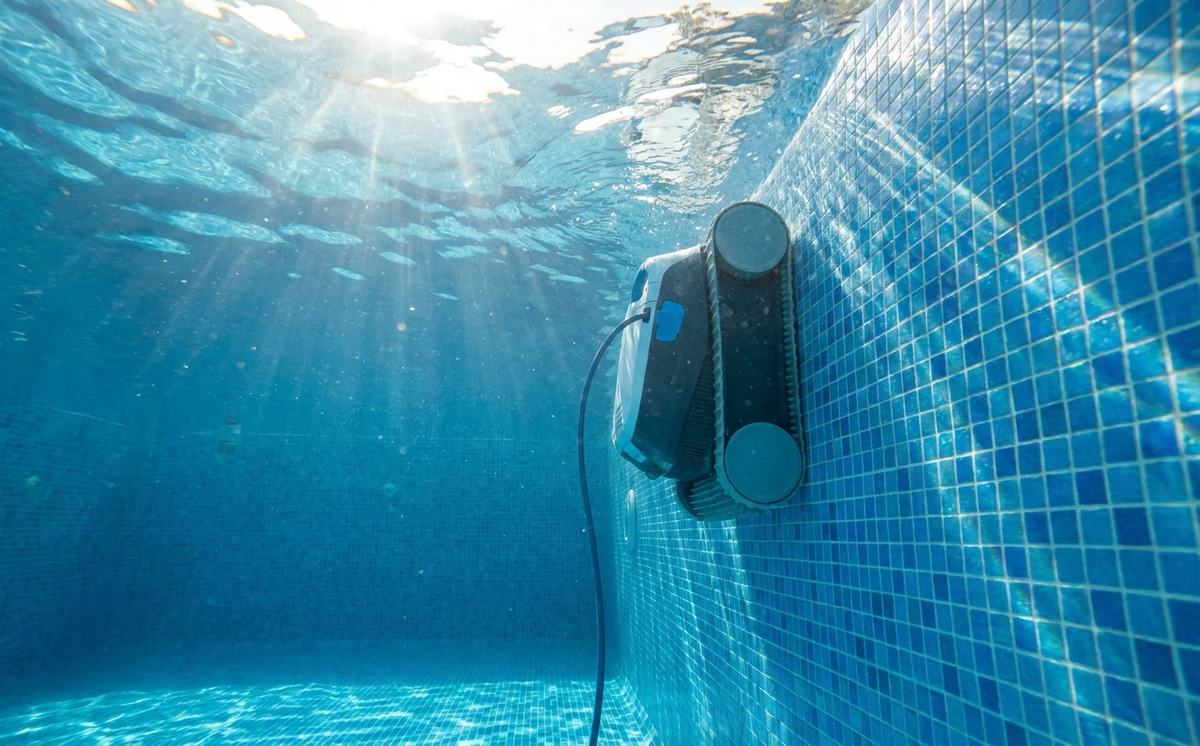
Automatic cleaners are where most vacuuming actually happens in Peoria, so it’s worth getting the choice right. Suction-side cleaners are cheap and tireless, but everything they collect goes through your pump basket and filter. In our dust-heavy climate that means your filter absorbs the whole desert, which shortens the time between filter cleanings and slowly costs you flow.
Robotic cleaners carry their own motor and their own filter basket. The dust ends up in a tray you rinse out in two minutes, your pool’s filter stays cleaner for longer, and the newer models scrub the waterline too. They cost more upfront, and the basket does need regular emptying, a detail the marketing photos skip. For pools under mature trees in the older Peoria neighborhoods near downtown, where leaf load is constant, we usually point owners toward a robot plus a weekly manual touch-up. Out in newer areas like Vistancia, where the enemy is fine blowing dust off open desert, the robot’s independent filtration is even more valuable.
Why your vacuum has no suction
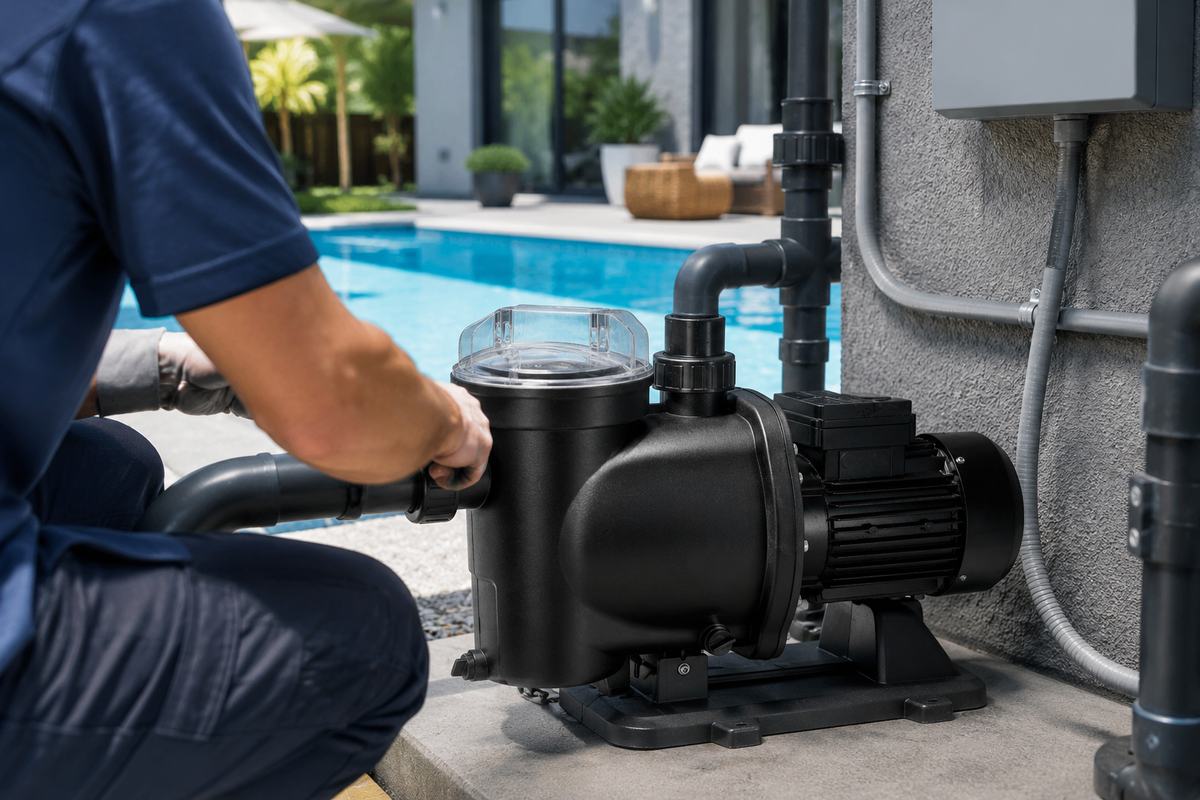
The most common service question we get about vacuuming isn’t technique, it’s power. When a vacuum that used to grip the floor starts wandering weakly, check these in order. First, the pump basket and skimmer basket: a packed basket is the cause more than half the time. Second, the hose: a single pinhole leak lets air in and breaks suction, and hoses in our sun crack early. Third, the pump lid o-ring: if you see air bubbles swirling in the pump basket, the lid isn’t sealing. Fourth, the filter: a loaded filter chokes flow everywhere. And if none of those solve it, the pump itself may be losing its prime or its impeller may be clogged, which is where our pool pump repair team earns its keep.
Habits that keep the pool clear between vacuums
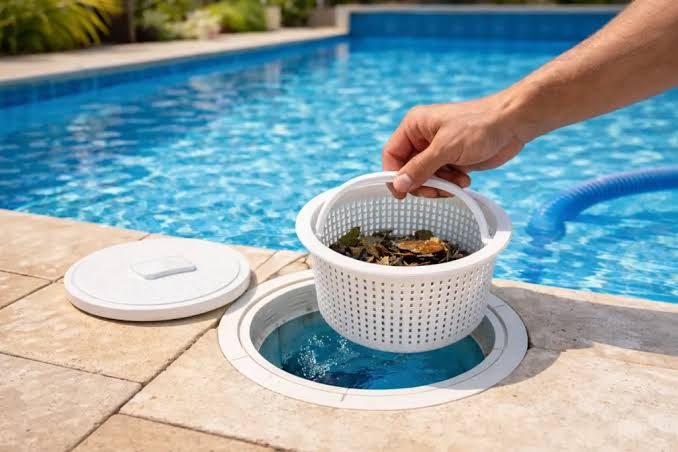
The less that reaches the floor, the less you vacuum. Skim the surface every day or two in fall, because floating leaves sink within a day and become vacuum work. Empty the skimmer baskets every time you walk past; a working skimmer catches debris before it settles. Keep your pump runtime honest, since circulation is what delivers debris to the skimmer in the first place. And if the water stays hazy no matter how much you vacuum, the problem usually isn’t dirt at all; our guide on cloudy pool water walks through the chemistry side.
Questions Peoria pool owners ask us
How often should you vacuum a pool?
Once a week during swim season is the standard, and that’s the cadence we keep on service routes. In fall leaf season or after a dust storm, more often. A pool with a good automatic cleaner may only need manual vacuuming for touch-ups and cleanups.
Can I vacuum algae out of my pool?
Yes, and you should, but vacuum it to waste, not through the filter. Dead and living algae are fine enough to pass through most filters and recirculate. Pair the vacuuming with a proper shock treatment or the algae returns within days.
Why does dust blow back out of the return jets after vacuuming?
The particles are finer than your filter can catch, so they take a round trip. Vacuum fine dust to waste if you have a multiport valve, or use a robotic cleaner with its own fine-mesh basket. A worn or torn filter cartridge makes this worse and is worth checking.
How long does it take to vacuum a pool?
A typical residential pool takes 20 to 45 minutes by hand when done at the correct slow pace. If you finished in ten, you likely stirred more than you collected. Big post-storm cleanups can take longer than an hour.
How much water do I lose vacuuming to waste?
Plan on a few inches of pool level for a normal session, more for a long algae cleanup. Top the pool up above normal before you start, keep the session efficient, and refill afterward. The water cost is real but usually worth it for heavy debris.
Is a robotic pool cleaner worth it in Arizona?
For most Valley pools, yes. Because a robot filters debris in its own basket instead of your pool’s filter, it directly offsets our biggest local problem, fine dust. Owners with heavy tree cover or frequent storms tend to see the payoff fastest.
Or never touch the pole again
There’s a reason vacuuming is the chore that converts DIY pool owners into service customers. It’s not hard, it’s just endless. Orange Tree Pool Service includes brushing, skimming, basket emptying, and vacuuming as needed on every visit of our weekly pool service in Peoria, along with the water testing that keeps debris from turning into an algae problem. Call (623) 343-0400 or request a free quote and reclaim your Saturday mornings.
For the comments: manual pole, suction cleaner, or robot, what’s doing the vacuuming at your house, and would you buy the same setup again? Honest reviews from real Peoria backyards help your neighbors more than any ad.