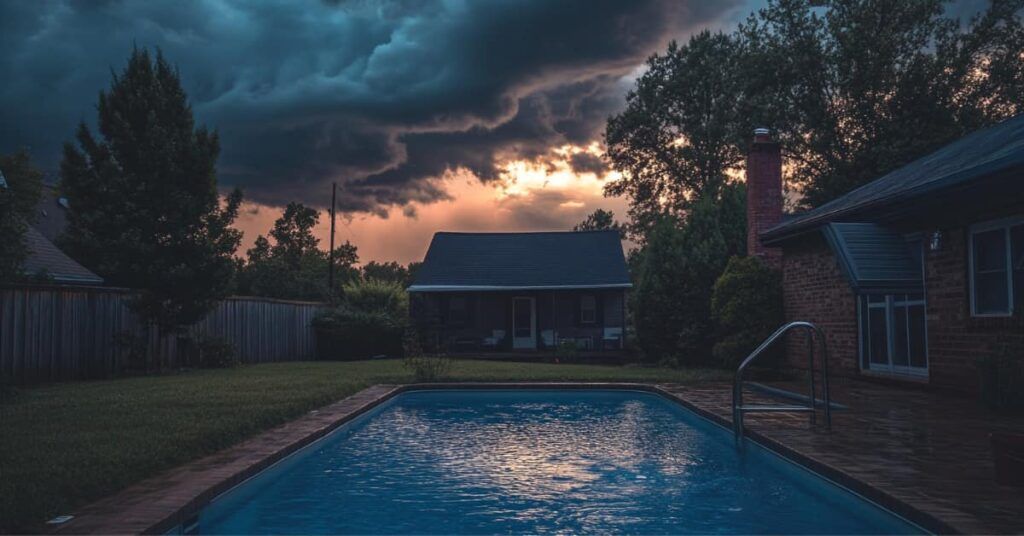
By late July, most Phoenix pools are running water temperatures in the upper 80s to low 90s. That’s bathwater. It feels great at 9 p.m., but your chlorine is fighting a losing battle against triple-digit heat, brutal desert sun, and a pool that gets more swimmers in one weekend than some pools see all month. If your water has ever gone from sparkling on Monday to dull and hazy by Friday, that’s the fight you’re watching.
Shocking the pool is how you reset it. Here’s what shock actually does, how to use it without wrecking your water chemistry, and how often Phoenix pools really need it in summer.
What pool shock actually is
Pool shock is a concentrated dose of chlorine (or a chlorine-free oxidizer) added to push free chlorine far above its normal level. That spike burns off chloramines, kills bacteria, and stops algae before it takes hold. Your everyday chlorine maintains the water. Shock resets it.
One bit of vocabulary, because it matters when you test. Free chlorine is the active sanitizer doing the work. Combined chlorine is chlorine that has already latched onto sweat, sunscreen, and everything else swimmers bring in. It is used up, and it stinks. That sharp “chlorine smell” at a packed public pool is combined chlorine. A healthy pool barely smells at all.
How often should you shock a pool in Phoenix?
In a Phoenix summer, shock your pool about once a week. In spring and fall, every two weeks is usually enough. In winter, most pools hold fine with a shock every three to four weeks.
Weekly sounds aggressive if you learned pool care somewhere cooler. Here, three things gang up on your chlorine from June through September. Average July highs at Sky Harbor run around 106°F, and pool water sits in the upper 80s to low 90s, which is the temperature range where algae is happiest. Our desert sun destroys unprotected chlorine in a matter of hours. And monsoon season, which officially runs June 15 to September 30, can drop a haboob’s worth of dust into your pool in one evening.
The calendar is only half the answer, though. Shock your pool any time one of these happens, whatever the date says:
- A pool party or a heavy swim weekend
- A dust storm or monsoon downpour
- The water looks dull, hazy, or slightly green
- A strong chlorine smell (remember, that’s combined chlorine talking)
- Your test shows free chlorine near zero
How to shock a pool, step by step
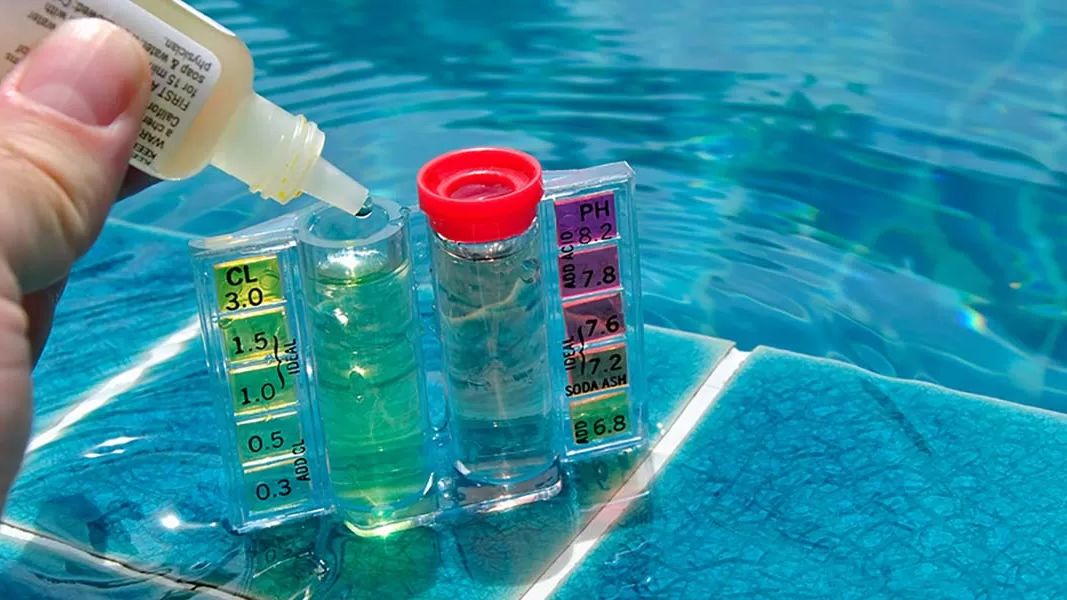
- Test the water first. Check free chlorine, pH, and alkalinity. Shock works best with pH between 7.2 and 7.6. High pH weakens chlorine, and Phoenix water drifts high, so this step earns its keep. If your pH is stubborn, our guide on lowering pH and alkalinity in the summer heat walks through it.
- Know your gallons. Most Valley residential pools run somewhere between 10,000 and 20,000 gallons. Dosing blind is how pools end up over- or under-shocked.
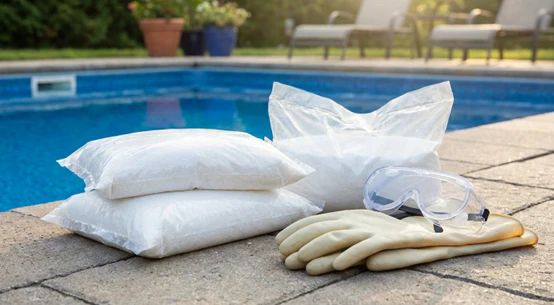
- Pick your shock and follow the label. Most granular products dose at roughly one pound per 10,000 gallons. Fighting visible algae? You’ll need more, sometimes double or triple. If the pool is fully green, that’s a different job. Our post on fixing a green pool fast covers it.
- Wait for sundown. This is the Phoenix rule people skip. Shock added at noon in July gets shredded by UV before it finishes the job. After sunset, every bit of chlorine works for you.
- Pre-dissolve if the label says so. Granular cal-hypo poured straight in can bleach spots on plaster and settle on the floor. A 5-gallon bucket of pool water, add the shock, stir, done. Always add chemical to water, never water to chemical.
- Pour around the perimeter. Walk the deep end and edges, not one spot, and never through the skimmer.
- Run the pump overnight. Eight hours minimum so the shock actually circulates. If you’re not sure your run time is right for summer, see our guide to pump run times in the summer heat.
- Retest before anyone swims. You’re clear when free chlorine comes back down to 1 to 4 ppm. That usually takes 8 to 24 hours.
Which shock works best with Phoenix water?
They all raise chlorine. They don’t all leave the same things behind, and that’s where Phoenix water changes the math.
Cal-hypo (calcium hypochlorite) is the classic bagged shock: strong, cheap, effective. Its baggage is calcium. Phoenix tap water is already rated hard to very hard by the city’s own water quality reports, so pools here creep toward high calcium on their own. If your calcium hardness is already up there, cal-hypo speeds up the scale and cloudy-water problems.
Dichlor dissolves easily and is gentle on surfaces, but every dose adds cyanuric acid (stabilizer). CYA builds up and never evaporates out, and too much of it makes chlorine sluggish. We meet a lot of Valley pools with sky-high CYA for exactly this reason.
Liquid chlorine adds no calcium and no CYA, which makes it a favorite of pool pros across the Valley for routine summer shocking. It’s bulky to haul and loses strength sitting in a hot garage, so buy it fresh.
Non-chlorine shock (MPS) oxidizes the gunk without raising chlorine, and you can swim again in about 15 minutes. It won’t kill algae, so treat it as a freshen-up tool, not a rescue tool.
Mistakes we see on our routes
We clean pools across Phoenix every week, from Ahwatukee up to Moon Valley, and the same shocking mistakes come up over and over. Midday shocking tops the list; the sun eats the dose before it works. Pouring granular shock through the skimmer is a close second, and it can damage equipment. People also mix different shock types in one bucket (dangerous, truly, don’t), skip brushing the walls afterward, and forget the filter entirely. A dirty filter puts all that dead algae and debris right back into circulation. If the water stays hazy after a shock, our post on cloudy pool water explains what’s going on, and a professional filter cleaning usually sets it right.
Questions Phoenix pool owners ask us
How long after shocking a pool can you swim?
Wait until free chlorine drops back to 1 to 4 ppm, which typically takes 8 to 24 hours with chlorine-based shock. Test, don’t guess. With non-chlorine MPS shock, about 15 minutes.
How much shock does my pool need?
Follow the label for your pool’s volume. Most granular shocks dose at about one pound per 10,000 gallons for routine treatment. Algae calls for a heavier hand, often two to three times the normal dose.
Why is my pool cloudy after shocking?
Usually it’s dead algae and oxidized debris waiting for the filter to catch up. Run the pump, give it 24 hours, and clean the filter if it doesn’t clear. High calcium from cal-hypo shock in our hard water can also cloud things up.
Can I shock my pool during the day in Phoenix?
You can, but you’ll waste a good chunk of the dose. Phoenix sun degrades chlorine fast. Shock after sunset and let it work overnight instead.
Is pool shock the same as regular chlorine?
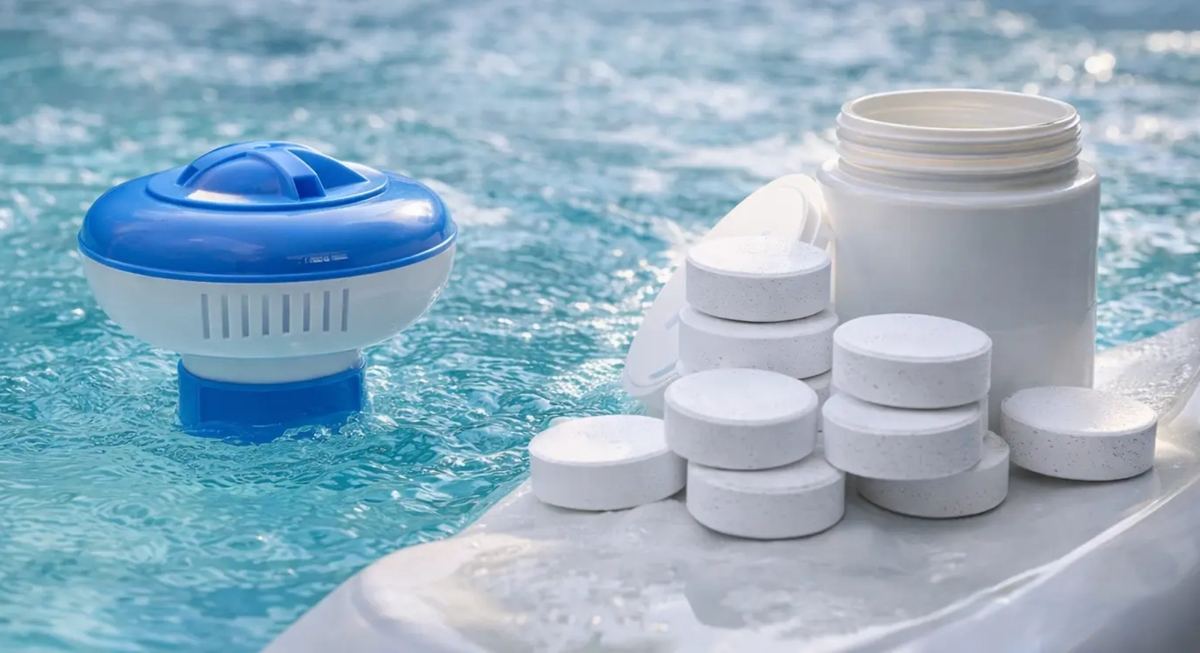
Same family, different job. Tabs release a steady trickle of chlorine to maintain the water. Shock is a big single dose meant to spike chlorine high enough to reset it.
Does shock kill algae?
Yes, chlorine-based shock kills algae when you dose high enough and brush the walls so it reaches everything. One light shock rarely fixes a real bloom, which is why green pools often need a multi-day attack.
Rather not haul chlorine buckets in 110° heat?
Fair. Shocking a pool isn’t hard, but doing it on time, every week, all summer, in this heat? That’s the part that gets people. Orange Tree Pool Service handles water testing, balancing, and shocking as part of weekly pool service in Phoenix, and we’re trusted by 100+ homes across the Valley. Call us at (623) 343-0400 or request a free quote and your pool stays swim-ready without you touching a test strip.
One question before you go: how do you time your summer shocks, on a set schedule or only when the water starts looking tired? Tell us in the comments.