How Long Should You Run Your Pool Pump in the Summer Heat?
When water temperatures climb into the 90s in the Phoenix summer, your pool pump becomes the difference between clear water and a green mess. Most pools in the Valley need 8 to 12 hours of pump run time per day during the hottest stretch of the year, because circulation is what keeps chlorine distributed, debris moving to the filter, and algae from taking hold in warm, sunlit water. Run the pump too little in this heat and you invite cloudy water and blooms. Run an old single-speed pump too much and your energy bill climbs fast. The goal is to run it long enough to fully turn the water over while spending as little as possible doing it.
This guide explains how to calculate the right runtime for your pool, why the desert heat changes the math, and how to tell when your pump is the reason your water will not stay clear.
How Long a Pool Pump Should Run in Phoenix Heat
The baseline rule is that your pump should circulate the entire volume of your pool at least once every 24 hours. That full cycle is called a turnover, and one turnover per day is the minimum for clear, sanitary water. In the extreme heat of a Phoenix summer, one turnover is the floor, not the target, because higher water temperatures and intense sun burn off chlorine faster and speed up algae growth, so more circulation is better.
For most residential pools that works out to roughly 8 to 12 hours a day in peak summer. Smaller pools with strong flow may need less, and larger pools or those under heavy tree cover may need more. You do not have to run those hours all at once. Splitting the runtime into two blocks, with one during the hottest part of the afternoon, keeps the water moving when algae pressure is highest and helps distribute chlorine when the sun is destroying it fastest.
Why the Desert Heat Changes the Math
Phoenix is one of the most demanding pool environments in the country, and three summer factors push runtime up.
Intense UV burns off chlorine dramatically faster than in cooler, shaded climates, so the water needs constant circulation to keep whatever sanitizer you have evenly distributed and working. Water temperatures in the 90s accelerate algae growth, which means the filter and circulation have to work harder just to stay ahead of a bloom. And monsoon season loads the water with dust and debris that the pump has to move to the filter before it settles and clouds the pool.
Evaporation adds a hidden risk. In the dry heat, water levels drop quickly, and if the level falls below the skimmer, the pump can lose prime and run dry, which starves circulation and can damage the pump itself. Checking your water level regularly during summer is part of keeping the pump doing its job, and a properly functioning auto-fill system makes that far easier to manage.
How to Calculate Your Pool's Turnover
You can dial in your runtime with a little math instead of guessing. Divide your pool’s volume in gallons by your pump’s flow rate in gallons per minute, or GPM, to get the minutes for one turnover, then divide by 60 for hours.
- Find your pool volume. Most Phoenix backyard pools hold between 10,000 and 25,000 gallons. If you do not know yours, a service technician can calculate it quickly.
- Find your pump’s flow rate. This is listed on the pump or in its documentation, commonly 40 to 80 GPM for a residential pump.
- Do the math. A 20,000 gallon pool with a 60 GPM flow rate takes about 333 minutes, or roughly 5.5 hours, for one turnover. In peak heat you would run closer to two turnovers, landing in that 10 to 11 hour range.
If running those hours on your current pump feels expensive, the pump type is usually the reason.
Single-Speed vs. Variable-Speed Pumps
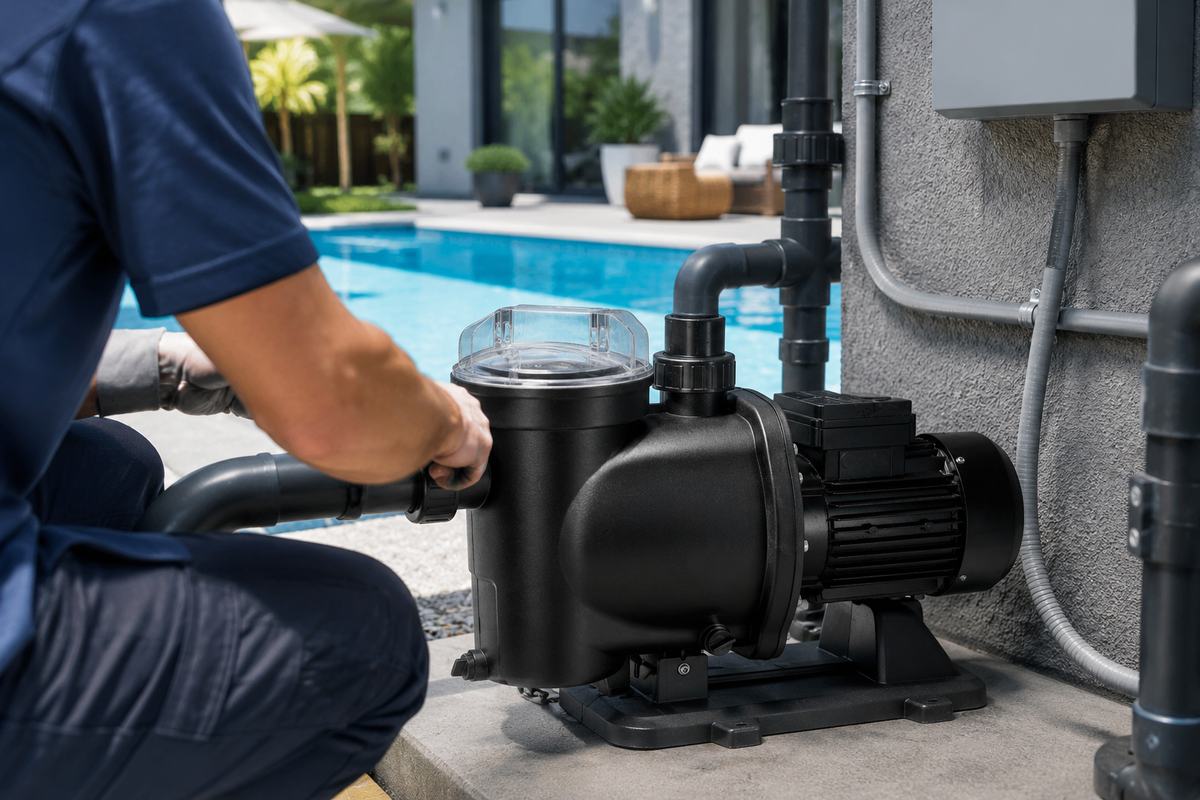
The biggest lever on your summer energy bill is the pump itself. A single-speed pump runs at full power the entire time it is on, which is loud, inefficient, and costly to run for the long hours a Phoenix summer requires. A variable-speed pump can run at a low, quiet speed for most of the day and ramp up only when needed, moving the same volume of water for a fraction of the energy.
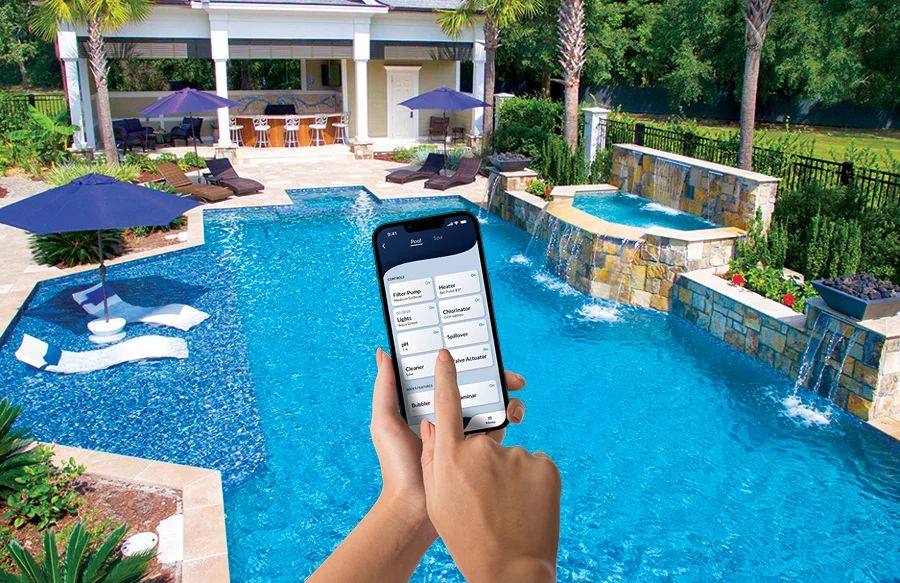
For pools that need long daily runtimes, a variable-speed pump often pays for itself in energy savings, and it is the single most effective upgrade for cutting pool operating costs in the desert. If your pump is an aging single-speed unit, upgrading to a variable-speed model through professional pool pump installation can dramatically lower what you spend to keep the water clear all summer. Pairing it with pool automation lets you set and adjust the schedule from your phone, so the pump runs exactly as long as the heat demands and no longer.
When Your Pump Is the Problem
Sometimes the water will not stay clear no matter how long you run the pump, and that points to the pump itself. Warning signs include a pump that is loud or grinding, one that loses prime and stops moving water, weak flow at the return jets, leaking at the seals, or a unit that shuts off from overheating during long summer runs. Any of those means the pump is not turning the water over effectively, and running it longer only adds cost and risk without fixing the clarity.
At that point it is time to have it looked at. Orange Tree Pool Service handles pool pump repair across Phoenix, Scottsdale, and the North Valley, and we are certified with the major equipment brands, including Pentair, Hayward, and Jandy. If keeping the pump on the right schedule and the water clear through the summer heat is more than you want to manage, our weekly pool service handles circulation, chemistry, and equipment checks for you.
Not sure whether your pump needs a repair or an upgrade? Call Orange Tree Pool Service at (623) 343-0400 or schedule a visit and we will take a look.
Final Thoughts
Your pump is the heart of your pool, and in the Phoenix summer it has to work hard to keep water clear against relentless sun, heat, and dust. Aim for at least one full turnover a day, lean toward 8 to 12 hours during the hottest stretch, and use a variable-speed pump and automation to do it affordably. When the water will not clear no matter how long the pump runs, the equipment is usually the cause. Orange Tree Pool Service repairs and upgrades pumps and keeps pools clear with weekly maintenance across Phoenix and the surrounding communities. Call (623) 343-0400 or schedule service online.