Here’s a North Phoenix pool riddle we hear every summer. Your water level looks fine for months, then one day the autofill line on your water bill gives you a jolt, or the level suddenly drops an inch overnight. Is the desert just drinking your pool, or do you have a leak?
Both answers are common here. A Phoenix pool loses a startling amount of water to plain evaporation, and that makes real leaks easy to miss. This guide gives you the normal numbers for our climate, a 24-hour test that settles the question, and the leak clues our techs check first on North Phoenix pools.
How much water loss is normal in Phoenix?
In the peak of a Phoenix summer, a pool loses about a quarter to half an inch of water per day to evaporation. That works out to roughly 2 to 3 inches a week. Losing more than half an inch a day, or losing water overnight, points to a leak.
Over a full year, an uncovered Valley pool gives up somewhere between 4 and 6 feet of water to the sky. Dry air, triple-digit heat, and wind all pull moisture off the surface, and a spa spillover or waterfall speeds it up because moving water evaporates faster. So before you assume the worst, know that a dropping water level in July is partly just the desert doing desert things.
The catch in North Phoenix is that most newer pools have an autofill, and an autofill quietly tops off whatever disappears. Plenty of homeowners in Desert Ridge and Norterra never see their level move at all. The leak shows up on the water bill instead, months later.
The bucket test: settle it in 24 hours
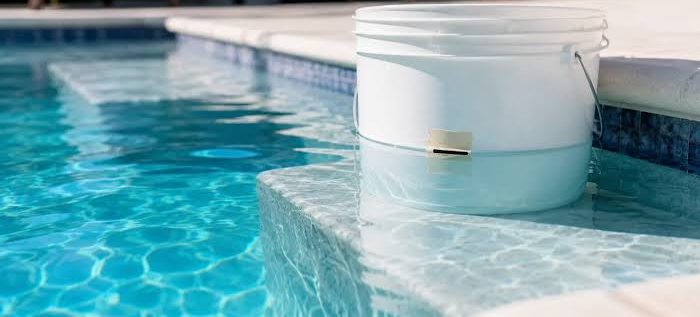
You don’t need special equipment to tell evaporation from a leak. You need a bucket and a marker.
- Turn off the autofill. This is the step Phoenix guides always skip, and it matters most here. If the autofill keeps refilling, the test tells you nothing.
- Fill a bucket most of the way with pool water and set it on the top step, so the water inside matches the pool’s temperature and sun exposure.
- Mark both levels. One line inside the bucket, one line for the pool level on the tile or the bucket’s outside.
- Run the pump normally and wait 24 hours. No swimming, no splash battles.
- Compare the drops. Evaporation hits both the bucket and the pool equally. If the pool fell noticeably more than the bucket, water is leaving somewhere it shouldn’t.
- Repeat with the pump off if the first round showed a leak. The difference between the two runs narrows down where the problem lives, which brings us to the next section.
What the pump on vs. pump off pattern tells you
This one detail does half of a leak detective’s job. Pools lose water differently depending on whether the equipment is running.
Loses more with the pump on: the leak is likely on the pressure side, the plumbing that pushes water back to the pool after the filter. Backwash lines and return plumbing are the usual culprits, and a sticking backwash valve can quietly send water down the drain line every hour the pump runs.
Loses more with the pump off: suspect the suction side or a structural issue, since standing water finds cracks and fittings when nothing is moving.
Level stops dropping at a specific point: that’s your biggest clue. Water stops at the bottom of the skimmer mouth? The skimmer is the prime suspect. Stops at the light? Check the light niche. The pool is telling you exactly where it hurts.
Signs it’s a leak, not evaporation
Beyond the bucket test, these are the tells we look for on service visits:
- Losing more than half an inch a day, or an inch or more overnight
- An autofill that runs constantly or a water bill that jumped for no reason
- Chlorine and acid demand creeping up, because fresh fill water keeps diluting your chemistry
- A soggy patch of yard or one suspiciously green strip of landscaping that never dries out
- Cracks in the tile line or deck, or tiles popping loose
- Air bubbles blowing from the returns or air in the pump basket
- Wet spots or mineral crust around the equipment pad
The usual suspects we find in North Phoenix
Our shop sits just off Rose Garden Lane, so North Phoenix pools from Desert Ridge up to Tramonto make up a big share of our routes. The same few leaks come up again and again. Skimmers crack where the throat meets the pool shell as decks settle and expand through our heat swings, and a failing skimmer often drains a pool to just below the mouth, then stops. If that sounds familiar, a skimmer replacement fixes it for good.
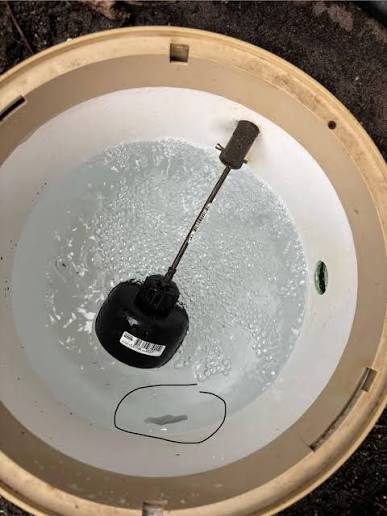
Autofill pots are the sneakiest. A worn float valve can leak in both directions: it either lets water run into the pool around the clock, masking a real leak somewhere else, or the pot’s own plumbing seeps into the ground. We handle autofill pot replacements for exactly this reason. Underground pool plumbing failures round out the list, especially on pools from the early 2000s building boom where fittings have simply aged out.
Questions North Phoenix pool owners ask us
Is my pool losing 1 inch of water a day normal?
No. Even in the worst of a Phoenix July, evaporation tops out around half an inch a day. A consistent inch a day means roughly 1,800 extra gallons a month on a typical pool, and it almost always means a leak worth finding.
Why is my pool losing water overnight?
Evaporation slows sharply overnight once the sun is down, though hot water and dry desert air keep it from stopping entirely. A drop you can clearly see by morning, especially below the skimmer line, is a leak signal. Run the bucket test to confirm.
How much evaporation is normal in Arizona?
Figure about a quarter inch a day for most of the year and up to half an inch a day in June through August. Over a year, an uncovered Valley pool loses roughly 4 to 6 feet of water to evaporation.
Why does my pool only lose water when the pump is on?
That points to a pressure-side leak: the plumbing after the pump, the backwash line, or a bad backwash valve. The leak only sees water pressure while the equipment runs, so the loss follows your pump schedule.
My pool stops losing water just below the skimmer. What does that mean?
The pool is showing you the leak’s depth. Water draining to just below the skimmer mouth and then holding usually means a cracked skimmer throat or a bad skimmer-to-pool seal, one of the most common repairs on Valley pools.
Does a pool cover actually reduce evaporation?
Yes, dramatically. A cover blocks the sun and traps humidity at the surface, cutting evaporation by well over half. In Phoenix that can save thousands of gallons a year, though most owners here use covers mainly in the cooler months.
Still not sure which one you’ve got?
Run the bucket test this week. It costs nothing and takes five minutes to set up. If the test points to a leak, or your autofill has been quietly papering over one for months, Orange Tree Pool Service is right here in the neighborhood. We track water level and equipment health on every visit as part of weekly pool service in North Phoenix, and we repair the usual leak sources from skimmers to autofills to underground plumbing. Call (623) 343-0400 or request a free quote.
Before you go, settle a neighborhood debate for us: do you run your autofill year-round, or shut it off to keep an eye on your water level? Tell us in the comments.