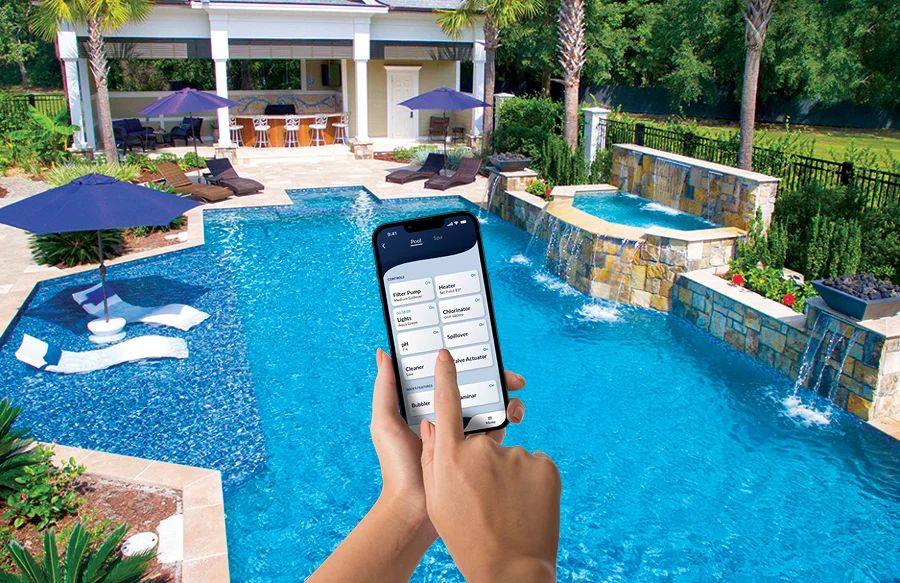
Picture a February evening in Paradise Valley. You’re leaving dinner, it’s 55 degrees out, and you’d love a soak. So you pull out your phone, tap once, and by the time you’re home the spa is at 102, the waterfall is running, and the lights match the mood. That’s the pitch for pool automation, and unlike a lot of smart-home pitches, this one mostly delivers.
But is it worth the money for your pool? That depends less on the technology and more on what’s sitting on your equipment pad. Here’s how automation actually works, who gets real value from it, and when we honestly tell customers to spend the budget elsewhere first.
What pool automation actually does
A pool automation system replaces your mechanical timers and equipment switches with a central controller you manage from a phone app. It schedules the pump, controls the heater and spa, switches lights and water features, runs valve actuators, and manages a salt system, all from anywhere with a signal.
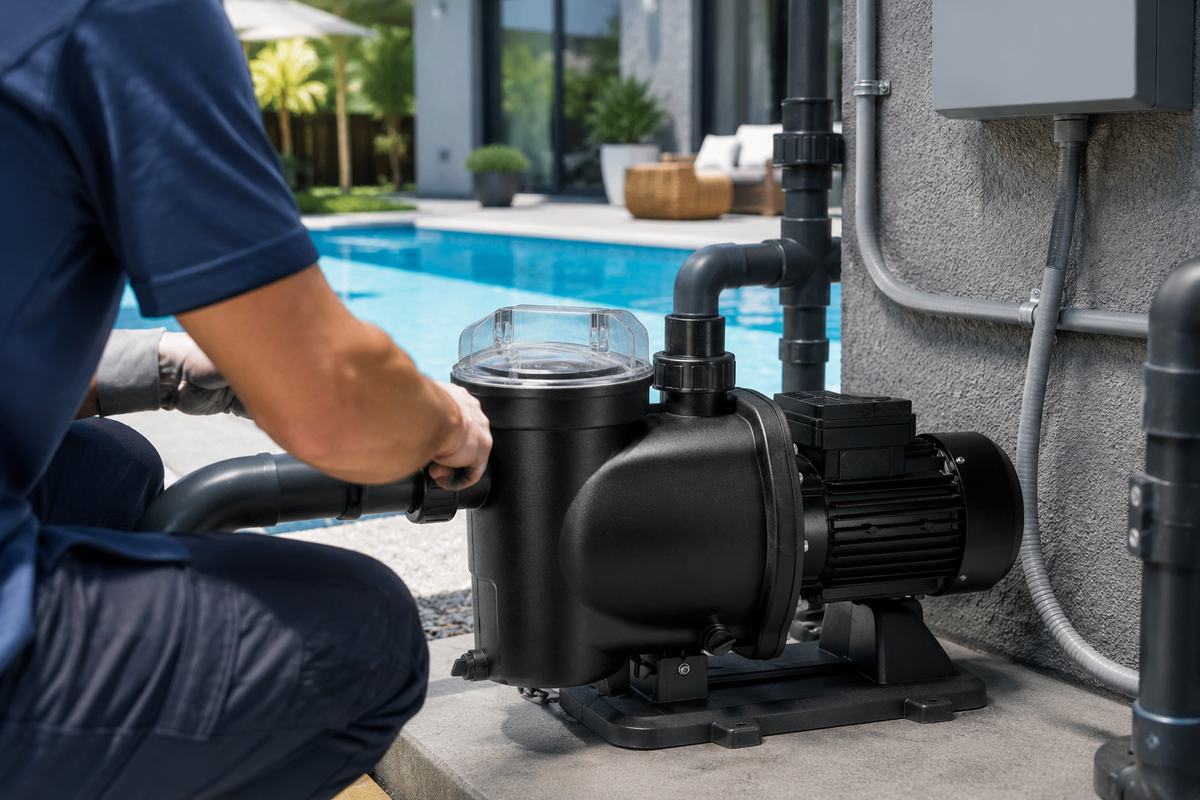
In practice, that means the equipment pad stops being a place you visit. Instead of flipping breakers and twisting timer dials, you set schedules once and adjust from the couch. Because the controller knows about all your equipment at once, it also coordinates things a wall of separate timers never could: heating the spa means the right valves turn, the pump speeds up, and the heater fires, in the right order, from one tap.
The three levels of automation
Not every pool needs the flagship system. Broadly, there are three tiers:
Smart timer
A connected relay or timer that schedules the pump and maybe a light from an app. Cheap and simple.
Best for: basic play pools with one or two pieces of equipment
Mid-tier controller
Controls pump, heater, lights, and a valve or two. App control without the full ecosystem.
Best for: pool-plus-heater setups that want convenience without complexity
Full automation panel
Pentair, Hayward, or Jandy central systems running everything: pump, heater, spa, valves, lighting scenes, salt cell, water features.
Best for: pool-and-spa combos, water features, and remote monitoring
Here’s our honest rule of thumb: count the things on your pad. If you have a pump and nothing else, automation is a luxury. But once you have a heater, a spa with valve actuators, colored lights, and a water feature, you’re managing five or six systems that all interact, and central control stops being a gadget and starts being the sane way to run the pool.
Why Paradise Valley pools are the perfect use case
Most pools we service in Paradise Valley are exactly that second kind: pool-and-spa combos with heaters, water features, and serious lighting. On top of that, many owners here split time between houses or travel often. For a snowbird or a frequent traveler, the ability to check the pool from another state, confirm the pump ran, and watch the freeze protection kick in during a cold snap is worth more than the convenience features. In fact, remote visibility is the feature our out-of-state owners say they’d pay for twice.
And since automation squeezes the most out of a variable-speed pump, the systems compound. The controller runs your low-and-long schedule perfectly, bumps to high speed for cleaning windows, and guarantees the minimum flow your heater and salt system need. The result is a pool that runs cheaper than a hand-managed one, not just fancier.
The benefits that survive the honeymoon
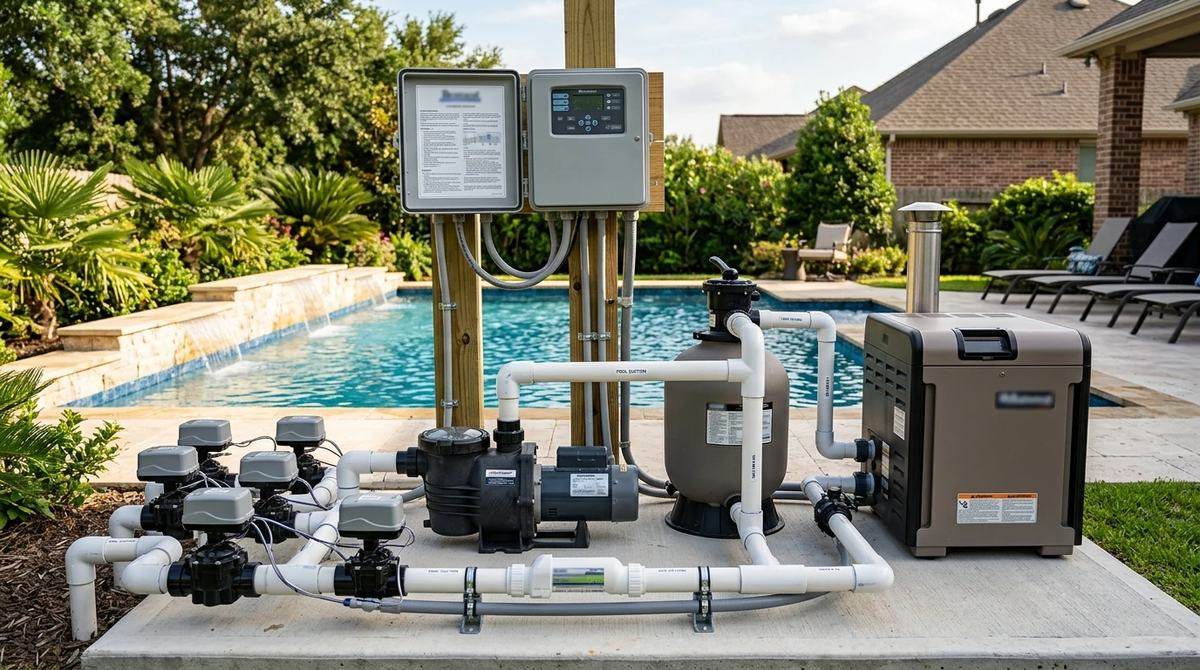
After the novelty of tapping your phone wears off, four benefits keep earning their keep. First, spa-on-demand genuinely changes how often you use the spa; when preheating takes one tap instead of a trip to the pad, winter soaks go from occasional to weekly. Second, schedules stop drifting, because there are no mechanical timer dials to creep or lose power settings after an outage. Third, freeze protection runs itself, which matters more in the Valley than people think; a few nights a year drop below freezing, and the controller automatically circulates water through exposed plumbing on those nights. Fourth, troubleshooting gets easier, since the system reports errors by name instead of leaving you to guess why the spa won’t heat.
What automation won’t do
To be fair, some expectations need trimming. Automation doesn’t clean your pool; brushing, netting, and water chemistry remain stubbornly physical, which is why our weekly pool service in Paradise Valley pairs so well with it. Chemistry sensors exist, but the affordable ones are informational rather than a substitute for real testing. And mixing equipment brands can get awkward, because each manufacturer’s panel plays best with its own family of equipment. That’s a solvable problem, but it’s exactly the kind of compatibility question worth asking before buying anything.
When we’d tell you to wait
If your pool is a simple play pool with a single-speed pump and no heater, spend your upgrade budget on the variable-speed pump first, because it pays you back and automation mostly can’t. Likewise, if your equipment is all a decade old and due for replacement soon, plan the automation as part of that refresh instead of bolting it onto gear you’re about to retire. The best automation installs we do are staged exactly that way: pump this year, panel and heater next.
Questions Paradise Valley pool owners ask us
What does a pool automation system control?
The pump and its schedules, the heater, pool and spa valves, lights and lighting scenes, water features, and a salt chlorine generator. Higher-end systems also handle spa blowers, secondary pumps, and landscape lighting from the same app.
Can an older pool be retrofitted with automation?
Almost always, yes. The controller replaces your existing timers and switches at the pad, so the pool’s age matters far less than the equipment’s. If your pump, heater, and valves are in good shape, a retrofit panel drops in cleanly.
Does pool automation save money?
Indirectly, and mostly through the pump. Because the controller runs an optimized low-RPM schedule without drift, it locks in the variable-speed savings and avoids the heater running longer than needed. The convenience is the product; the savings are a nice side effect.
What happens if my Wi-Fi goes down?
The pool keeps running. Schedules live on the controller at the equipment pad, not in the cloud, so an internet outage only pauses remote access. Everything resumes syncing when the connection returns.
Do I have to match the automation brand to my equipment brand?
It’s the path of least resistance. Panels communicate most fully with their own brand’s pumps, heaters, and salt cells, while third-party gear often works but with fewer features. We map out what you own before recommending a system.
Is a smart pool worth it for a rental or second home?
That’s arguably the strongest case of all. Remote visibility means you can confirm the pool is running, spot problems early, and prep the spa before guests arrive, all without a trip across town or across the country.
Make the pool the smartest thing in the backyard
If your equipment pad has outgrown its timers, automation is the upgrade that ties everything together. Orange Tree Pool Service designs and installs pool automation systems matched to your equipment, sets up every schedule, and shows you the app before we leave the driveway. We serve Paradise Valley and the surrounding Valley; call (623) 343-0400 or request a free quote.
For the comments: if you already run an automated pool, what’s the one feature you actually use every week? And if you don’t, what’s the one thing you wish your pool could do from your phone?